Customer Intelligence & Retention · July 19, 2026
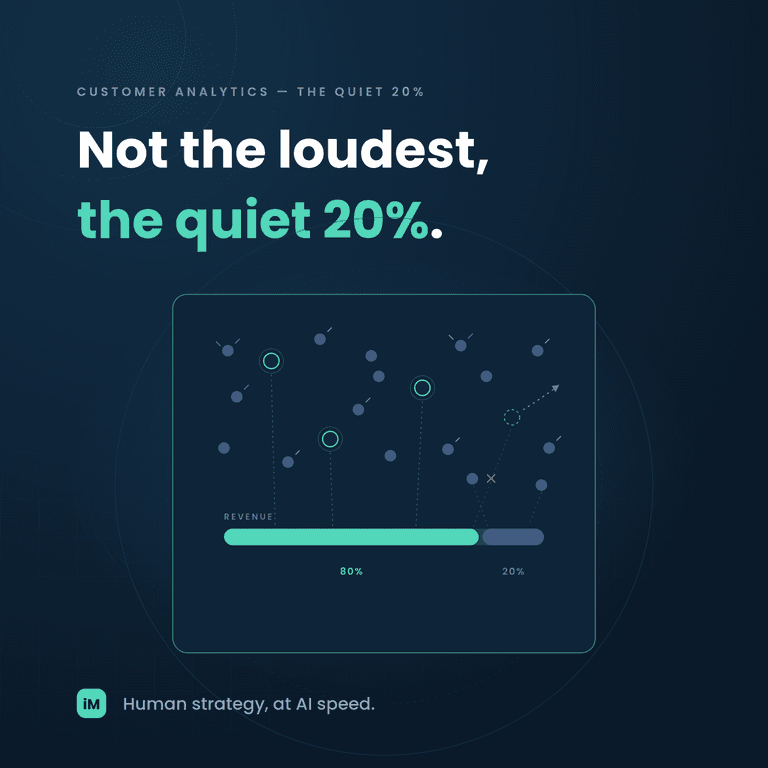
The Quiet 20%: The High-Value Customers Your Analytics Barely Notices Until They Leave
In most consumer businesses, twenty percent of the customer base produces sixty to eighty percent of the revenue. That twenty percent is often the segment analytics notices least — they do not open every email, they do not respond to promotions, and their departure is only visible in the aggregate after it has already happened.
Read more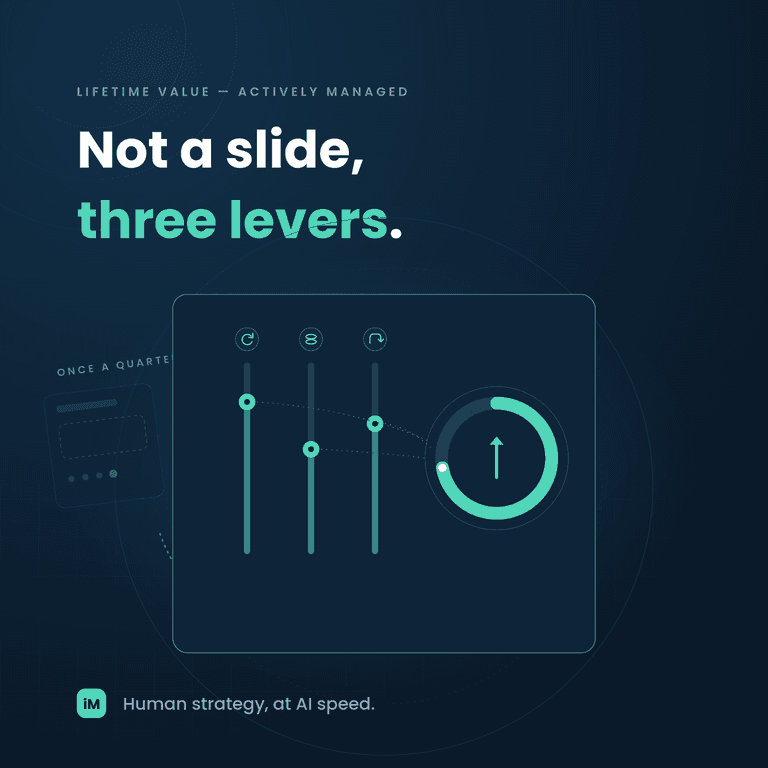
Customer Intelligence & Retention · July 18, 2026
Lifetime Value Is Not a Slide — It's a Number You Should Be Actively Managing
Most enterprise LTV numbers appear once a quarter on a board slide and are never touched between reports. That posture treats LTV as a metric to describe the business rather than a number to manage the business. The three levers that move it are known and measurable.
Read more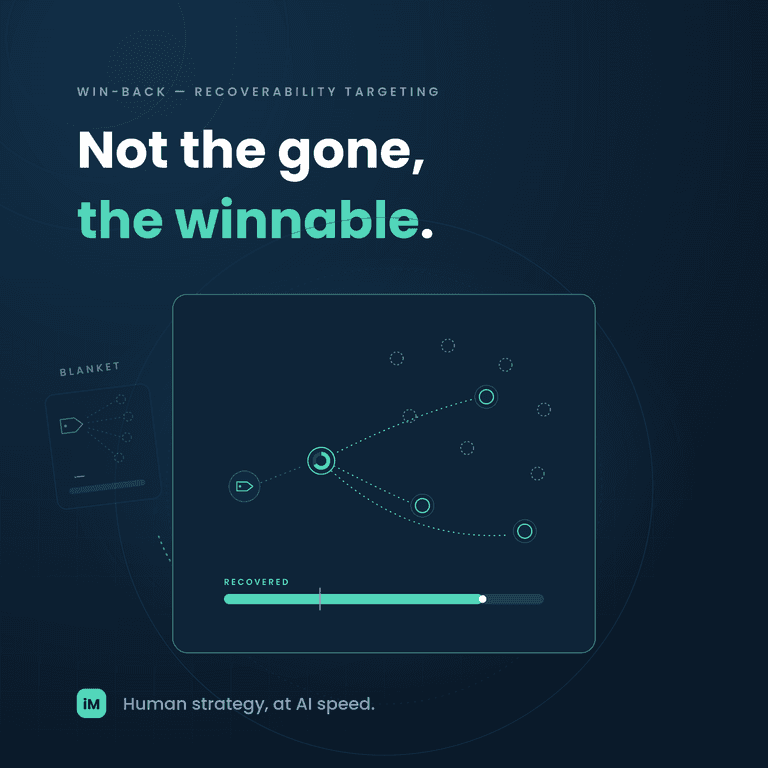
Customer Intelligence & Retention · July 17, 2026
Why 70% of Your Win-Back Budget Goes to Customers Who Were Never Coming Back
The default win-back campaign fires the same discount code at every lapsed customer. Most of the budget lands on customers who were never coming back, the recovery rate is a fraction of what it looks like, and the margin damage compounds every quarter.
Read more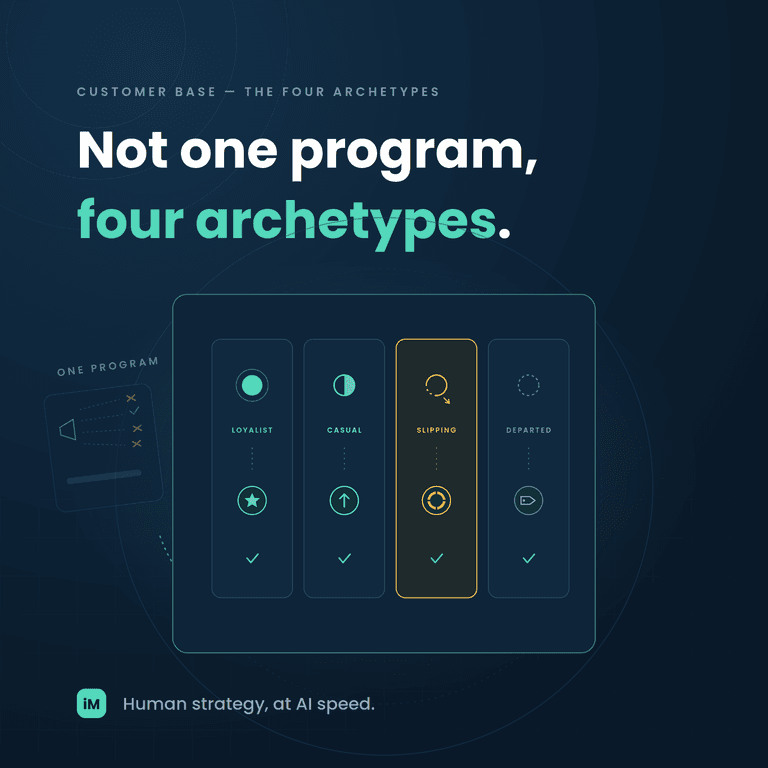
Customer Intelligence & Retention · July 16, 2026
Loyalist, Casual, Slipping, Departed: The Four Customer Archetypes and What Each One Actually Needs
Every customer in the base is one of four archetypes — Loyalist, Casual, Slipping, Departed. Each one needs a different intervention, and the generic 'customer marketing' program that treats them the same delivers the wrong action to three of them.
Read more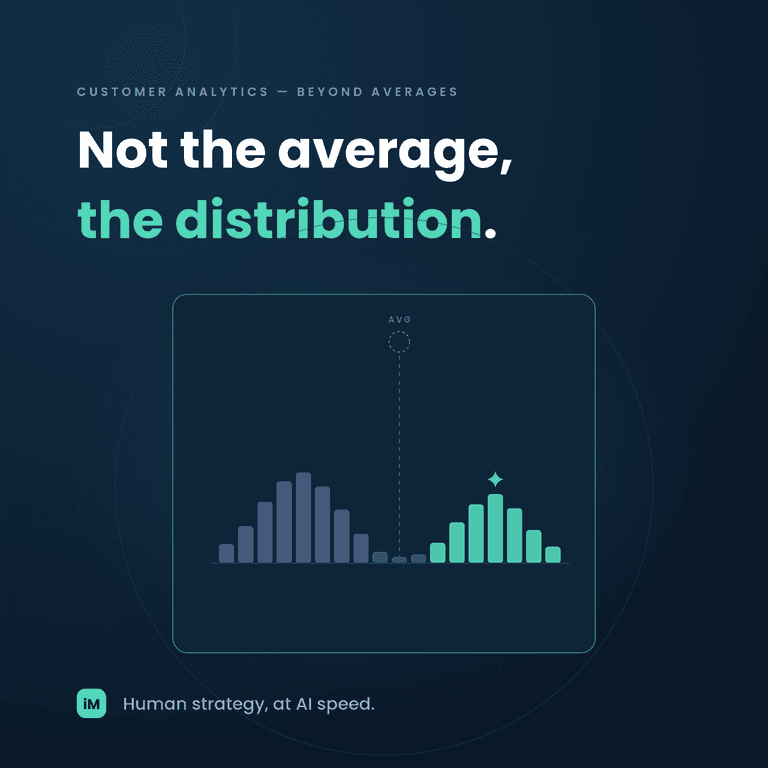
Customer Intelligence & Retention · July 15, 2026
Your Average Customer Doesn't Exist: Why Marketing Built on Averages Is Marketing to Nobody
Average basket size, average frequency, average retention — the numbers every marketing team defends in the quarterly review describe a customer who is not actually in the base. The distribution the averages hide is where the revenue and the risk both live.
Read more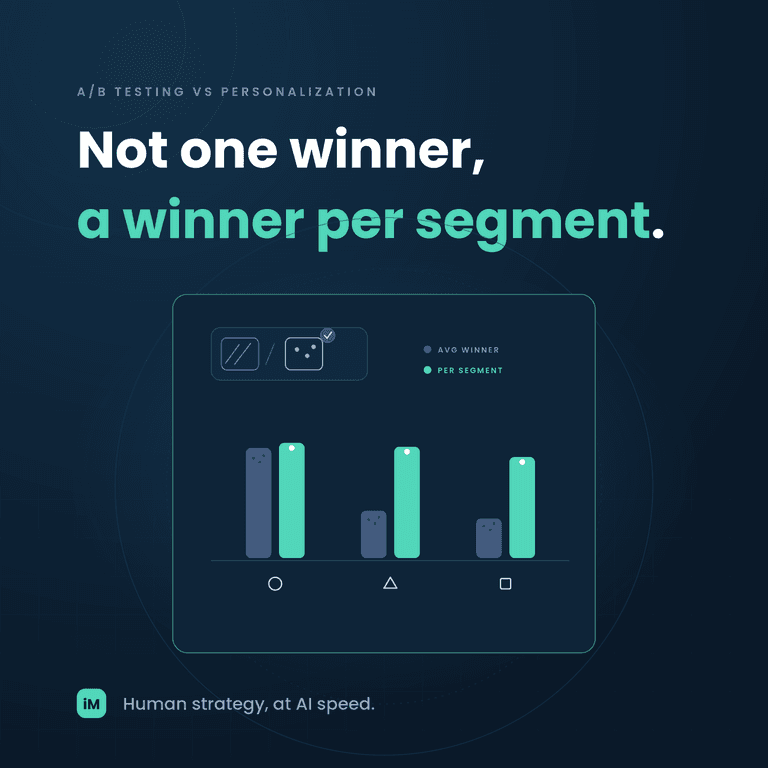
Real-Time Web Personalization · July 14, 2026
A/B Testing vs Personalization: Why the Winning Variant Is Still a Compromise
A/B testing finds the variant that performs best on average. That variant is a compromise between segments that would have preferred different content. Rule-based personalization delivers the per-segment optimum, and the aggregate conversion rate follows.
Read more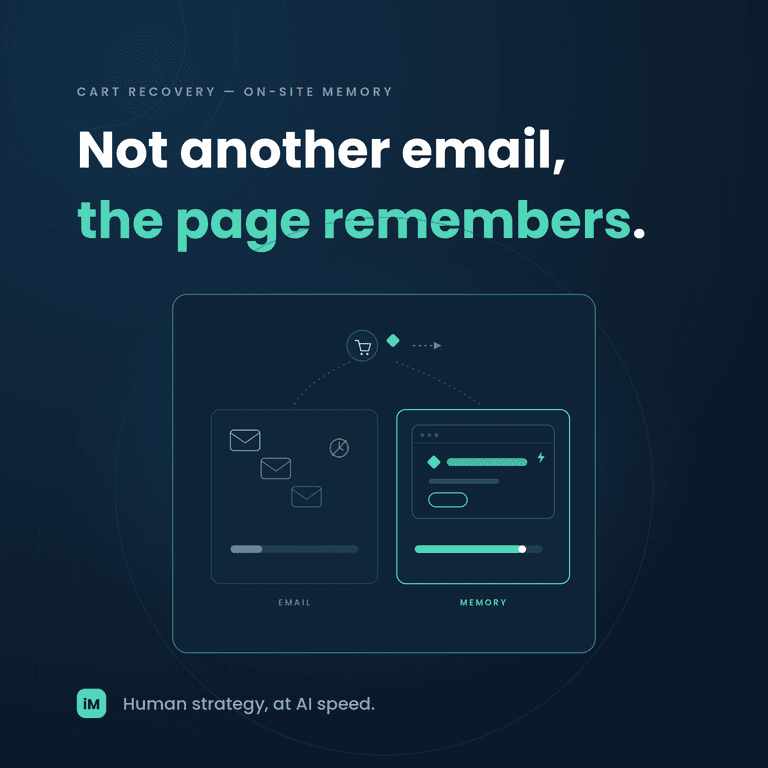
Real-Time Web Personalization · July 13, 2026
Cart Abandoners Don't Need Another Email — They Need a Homepage That Remembers Them
Email retargeting misses the intent window every time. On-site memory — a homepage that recognizes the returning shopper and adapts to what they were looking at — converts the same abandoners at rates the email campaign cannot approach.
Read more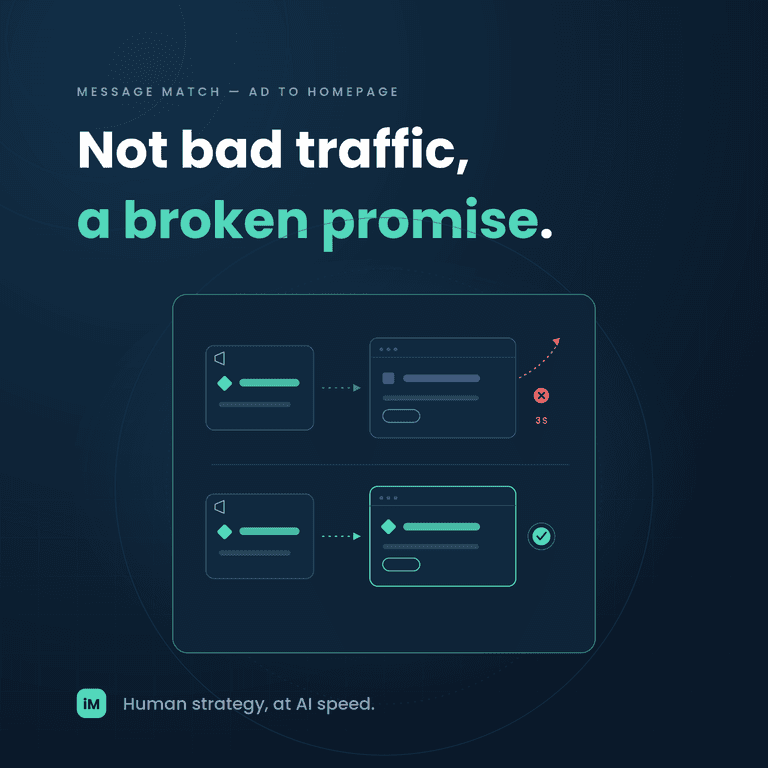
Real-Time Web Personalization · July 12, 2026
The Message-Match Problem: Why Your Meta Ad Clickers Bounce on Your Generic Homepage
The 40% bounce on paid traffic is usually diagnosed as 'bad traffic quality.' It is more often bad message continuity — the ad promised one thing, the homepage delivered another, and the visitor left inside three seconds.
Read more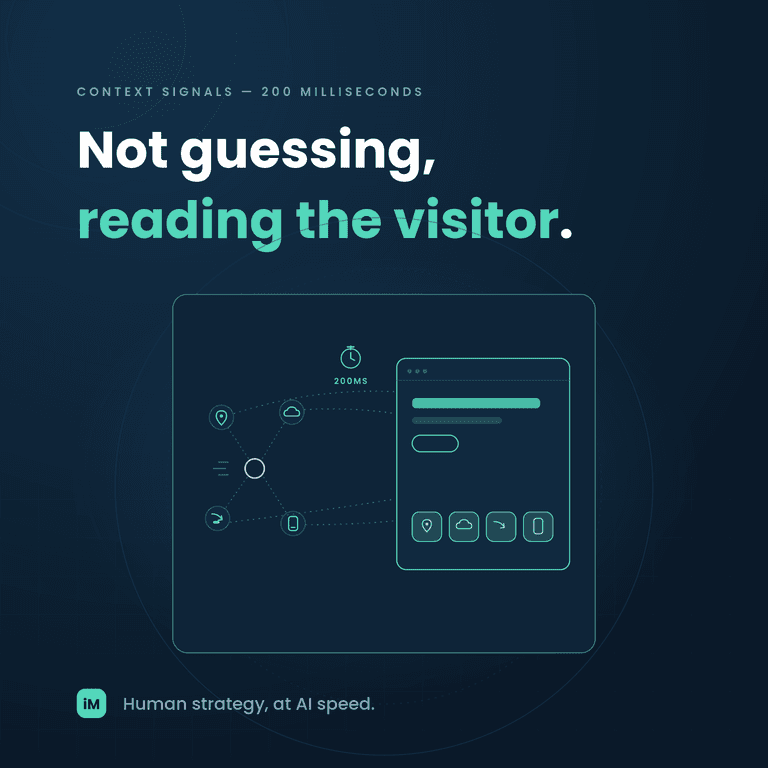
Real-Time Web Personalization · July 11, 2026
Location, Weather, Source, Device: The Four Context Signals Every Homepage Should Read (But Almost None Do)
Every visitor arrives carrying a context the homepage could read in the first 200 milliseconds. Four signals — location, weather, source, and device — cover the majority of buying-intent variance, and almost every enterprise homepage ignores all four.
Read more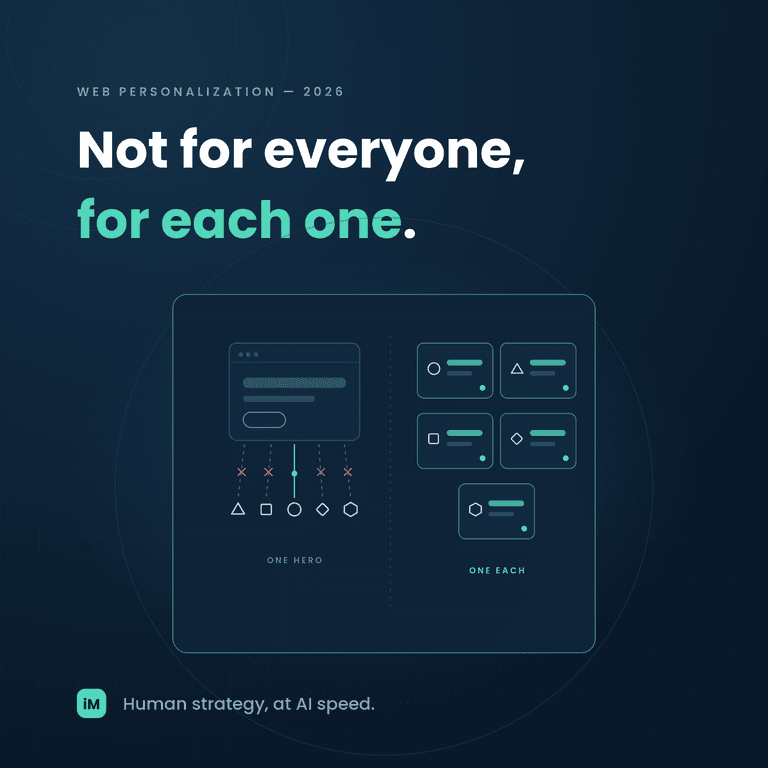
Real-Time Web Personalization · July 10, 2026
The Homepage That Talks to Everyone Talks to No One: The Cost of the One-Size-Fits-All Hero in 2026
The generic homepage optimized for the imagined average visitor is optimized for a person who does not exist. The composition of your bounce rate hides five audiences the current hero is silently losing.
Read more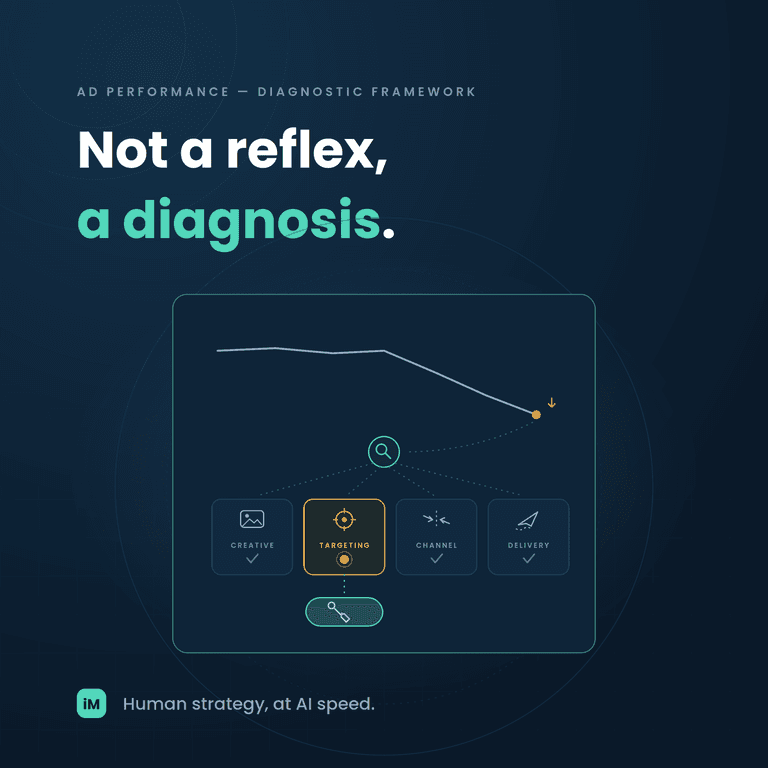
Ad Performance & Attribution · July 8, 2026
When to Blame the Creative, When to Blame the Channel: A Diagnostic Framework
When ad performance drops, the default reflex is to blame the creative. Sometimes that is correct. Often it is not. A four-signal diagnostic framework separates creative fatigue from targeting decay from channel compression from delivery drift.
Read more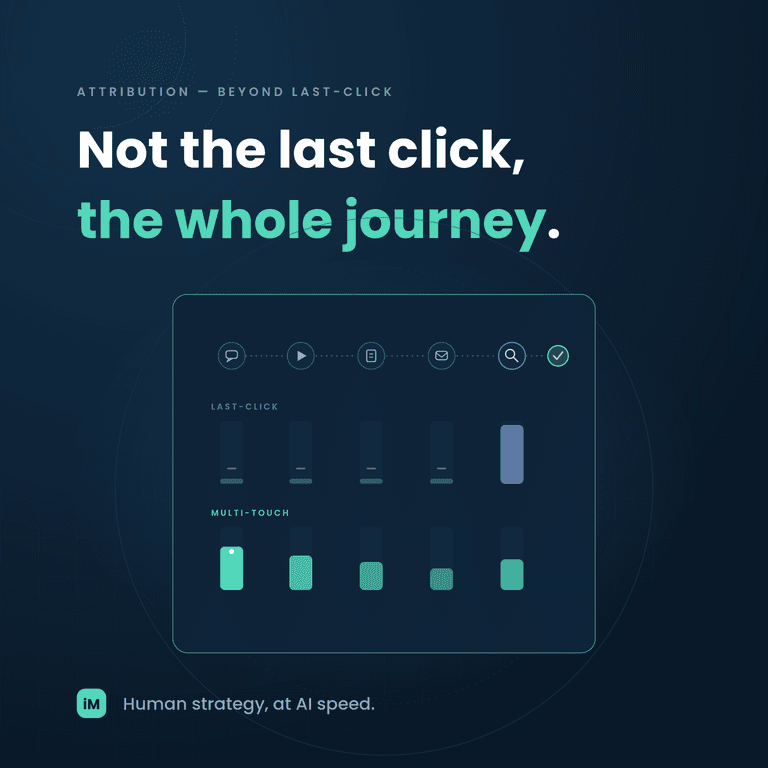
Ad Performance & Attribution · July 7, 2026
Attribution Truth: Why Last-Click Is Costing You Money
GA4's last-click default gives Search the credit and starves the channels that actually created the demand. UTM discipline and multi-touch attribution close the gap between what your dashboard reports and what your buyers actually do.
Read more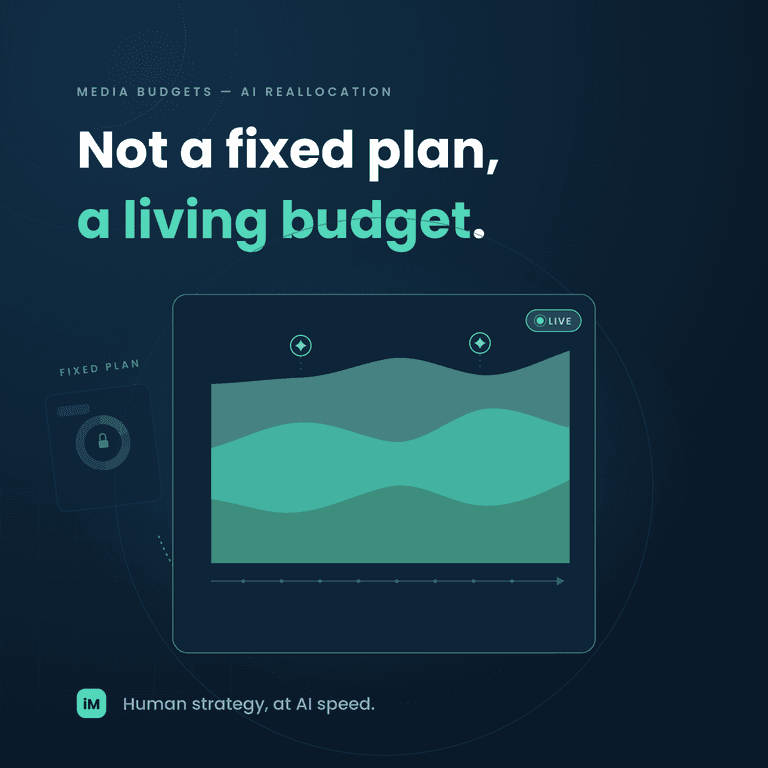
Ad Performance & Attribution · July 6, 2026
AI Budget Reallocation: The Death of the Fixed Media Plan
The annual media plan built in December for the following year survived when audience behavior moved slowly. It does not survive 2026 auction dynamics. Continuous AI-driven reallocation is the new operating rhythm.
Read more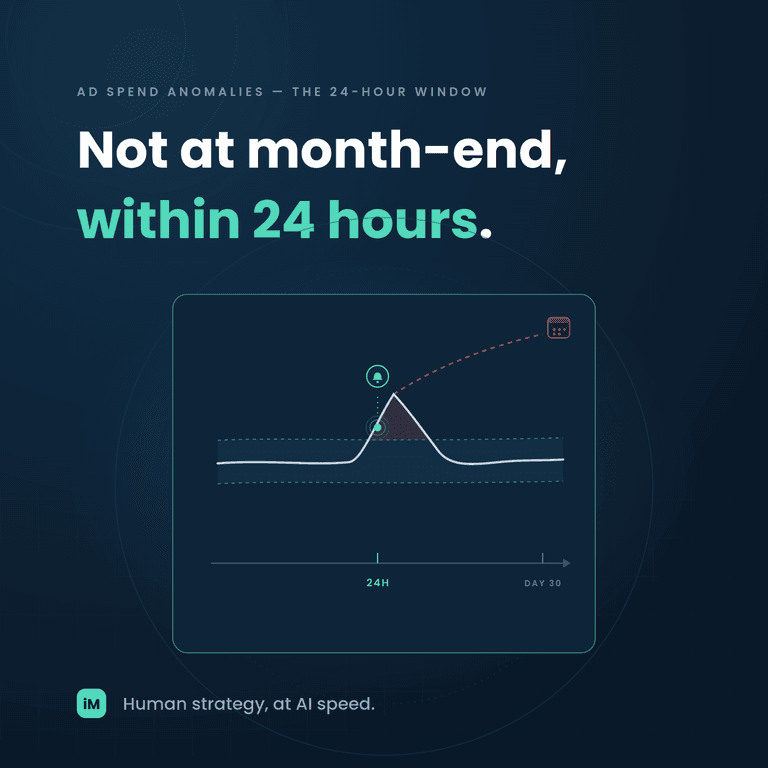
Ad Performance & Attribution · July 5, 2026
The 24-Hour Ad Waste Window: Catching CPC Spikes Before They Destroy the Quarter
Most ad waste happens in a 24-hour window that monthly review will never catch. Statistical anomaly detection on CPC, CTR, cost, and ROAS closes the window before the damage is priced in.
Read more
Company News · July 5, 2026
inMOLA Launches AI-Powered Marketing Decision Engine That Tells Brands What to Do Next
Built on proprietary algorithms drawn from 25 years of frontline marketing leadership, inMOLA scores a brand against its live competitive set and returns the single next move that matters — not another dashboard.
Read more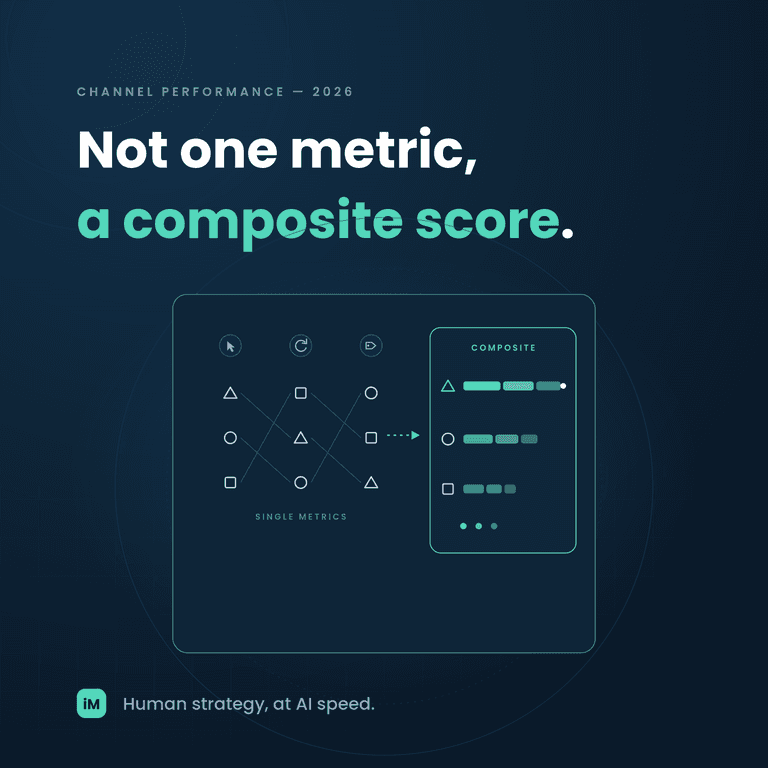
Ad Performance & Attribution · July 4, 2026
Why 'Which Channel Performed Best?' Is the Wrong Question in 2026
Ranking Meta against Google against TikTok on a single metric — CTR, ROAS, CPC — hides more than it reveals. A composite channel score changes what a marketing team argues about, and what they optimize toward.
Read more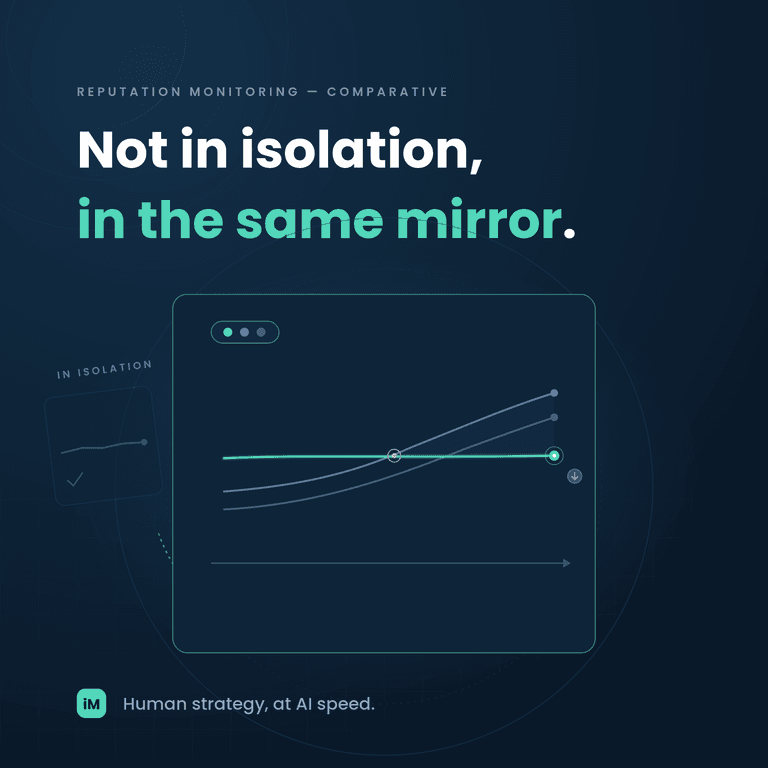
Brand Reputation Monitoring · July 4, 2026
Watching Yourself and Your Competitor in the Same Mirror: Why Reputation Is a Comparative Metric, Not an Absolute One
Most enterprise brand monitoring runs the brand as if it existed in isolation — its own sentiment trend, its own volume history, its own theme distribution. The framing is comfortable and it makes the reporting easy, but it misses the most important thing about reputation, which is that reputation is comparative. A brand whose sentiment held steady while every competitor's improved is a brand that has effectively lost ground. A brand whose negativity rose in a period when the whole category's did is a brand that did not underperform. Neither pattern is visible without the competitor in the same monitoring frame. Here is why comparative monitoring has quietly become the operating standard for enterprises running reputation as a strategic metric, what the same-mirror view reveals that solo monitoring misses, and how the shift changes the executive conversation about brand health.
Read more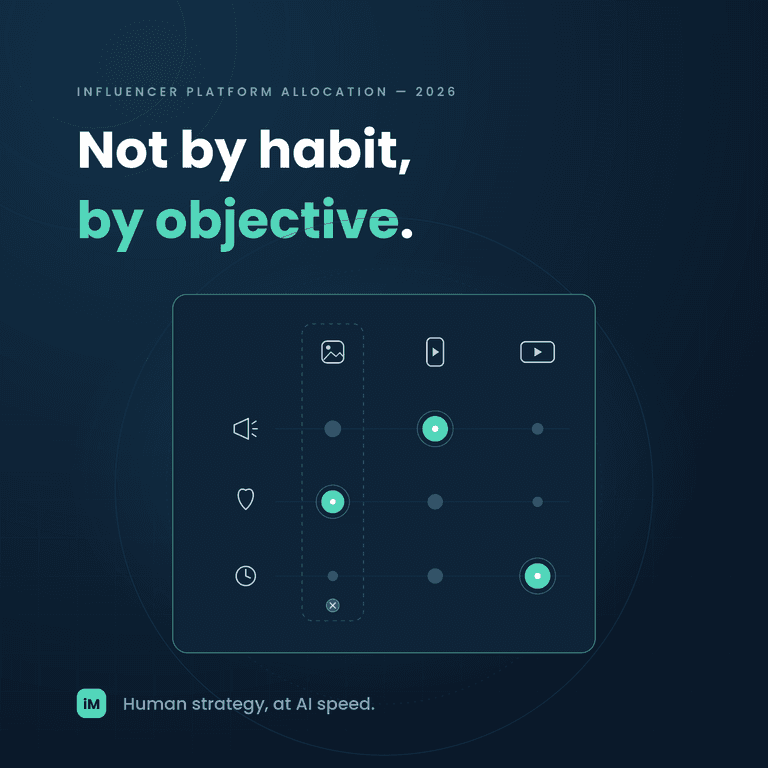
Influencer Marketing · July 1, 2026
Instagram, TikTok, YouTube: A Framework for Deciding Which Platform Actually Earns Your Influencer Campaign
Most enterprise influencer campaigns default to the platform where the brand already has an organic account, or to the platform the CMO is most familiar with. Neither is a defensible allocation. The three major platforms — Instagram, TikTok, and YouTube — have genuinely different engagement patterns, audience compositions, and campaign strengths, and picking the wrong one for a specific campaign objective can quietly cut the ROI by half. Here is what the three platforms actually do best, how to match platform to campaign objective, and how enterprises are building a cross-platform allocation framework that stops leaving performance on the table by picking the wrong platform out of habit.
Read more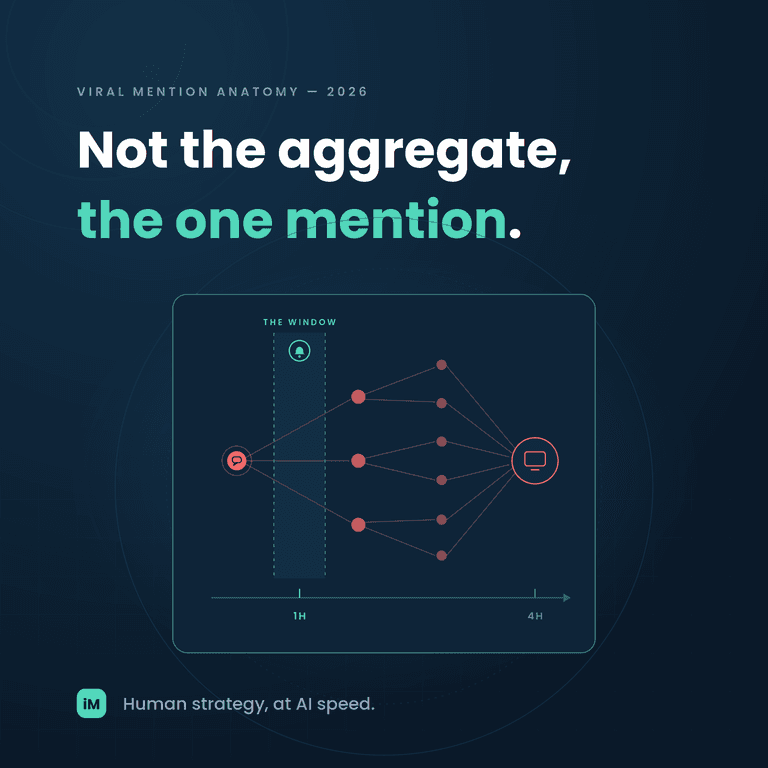
Brand Reputation Monitoring · July 1, 2026
The One-Tweet Crisis: The Anatomy of a Viral Negative Mention and the Response Window Most Brands Miss
A single tweet from an influential account can push a brand into a reputation crisis in under four hours. The cascade is well understood — the trigger post, the amplification wave, the mainstream pickup — and yet most brand monitoring is still calibrated to catch aggregate patterns rather than single high-velocity mentions. The result is a systematic mismatch where the crisis of the modern era is invisible to the tooling designed for a slower one. Here is the anatomy of a viral negative mention, why the response window has compressed to something closer to an hour than to a day, and how enterprises are rebuilding their alerting to catch the specific pattern before it consolidates.
Read more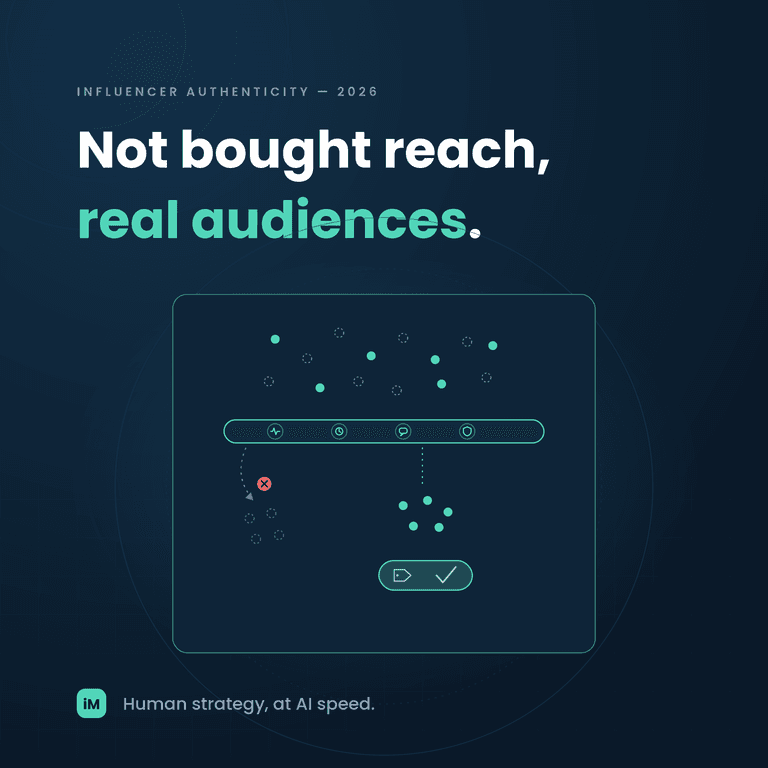
Influencer Marketing · June 30, 2026
Fake Followers, Real Costs: The Authenticity Signals That Separate Real Audiences from Purchased Ones
The fake-follower industry has grown into a shadow economy that costs brands hundreds of millions of dollars a year in wasted influencer spend. The economics work because the fraud is hard to detect and the detection responsibility sits with the brand, not the platform. In 2026 the authenticity signals that reliably separate real audiences from purchased ones are well understood, but most enterprises still do not use them systematically at the selection stage. Here is what those signals are, how they combine into an authenticity filter, and how enterprises that put the filter at the front of selection stop paying premium prices for audiences that will never engage.
Read more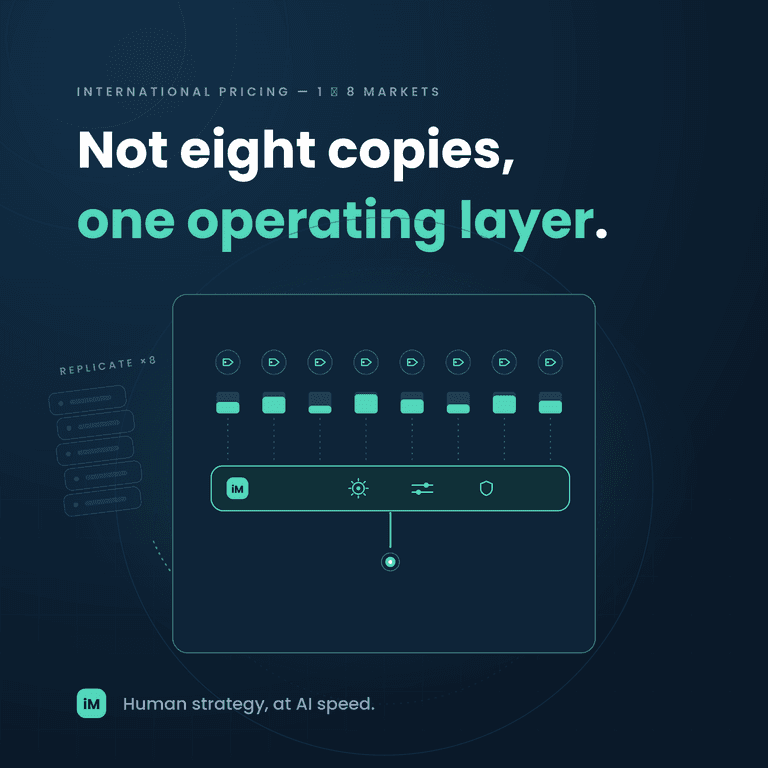
Pricing Strategy · June 30, 2026
From One Market to Eight: What Changes When Pricing Has to Scale Across International Markets
Pricing in a single market is complicated. Pricing in eight is a different exercise entirely. The natural instinct — replicate the home-market pricing process eight times — misses the operating discipline that turns multi-country pricing into a working system rather than a set of parallel struggles. Here is what actually changes when pricing has to scale from one market to eight, what enterprises tend to underestimate, and how to build a pricing operating layer that stays consistent without becoming rigid.
Read more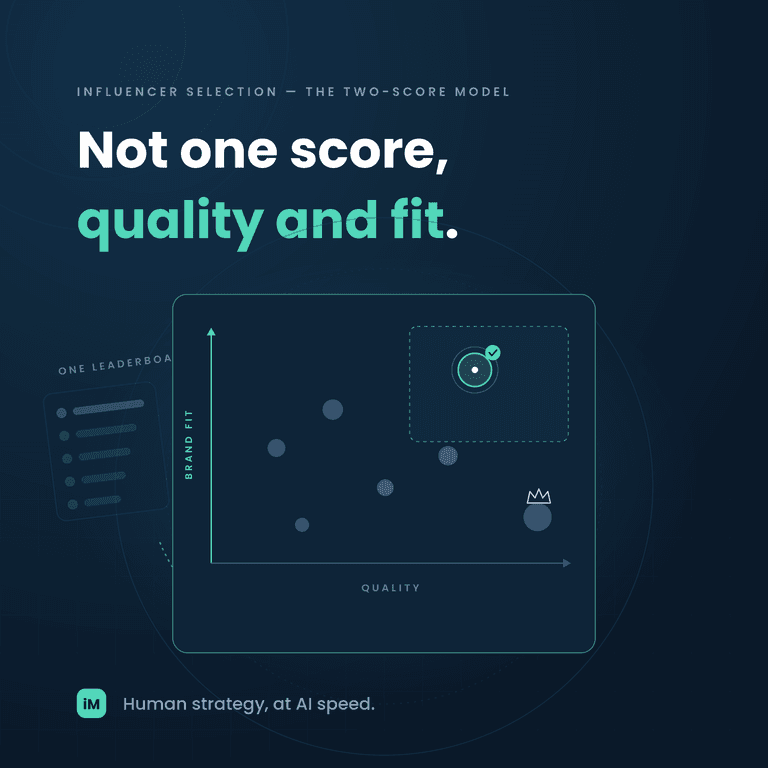
Influencer Marketing · June 29, 2026
Quality vs Brand-Fit: Why the Same Influencer Ranks Differently for Your Brand Than for Anyone Else
The industry loves single-number influencer scores. One rank, one leaderboard, one hero metric that decides who gets picked. In 2026 that framing is quietly failing enterprises, because the two questions single-number scores collapse — is this creator generally strong, and is this creator right for our brand — genuinely require independent answers. Here is why the two-score model has become the operating standard for enterprises running influencer programs at scale, what each score does, and how the shift from one rank to two separates the enterprises that pick creators who perform from the enterprises that keep hiring creators who look strong on a leaderboard that isn't theirs.
Read more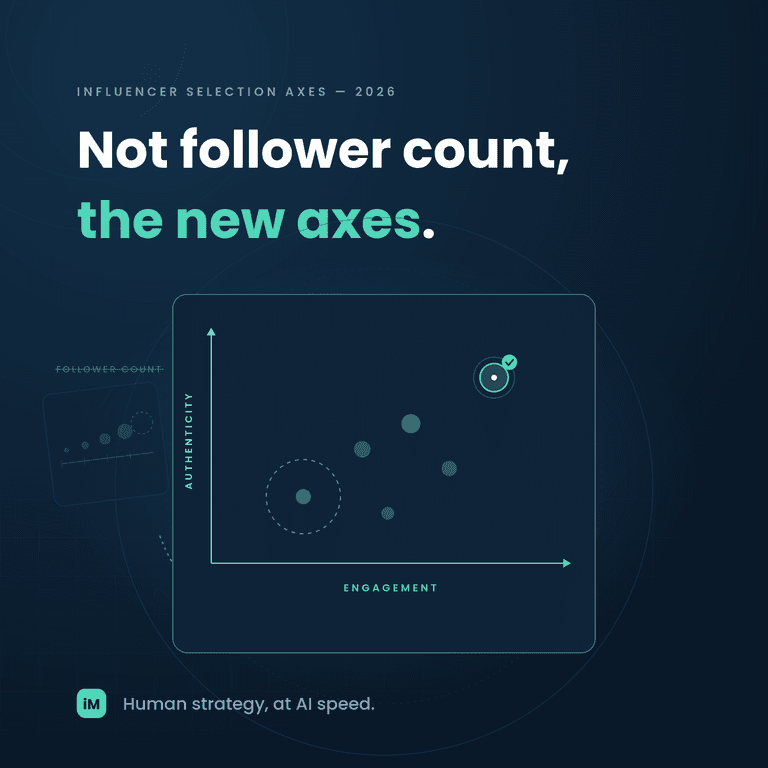
Influencer Marketing · June 28, 2026
The End of Follower Count: Why Engagement Rate and Authenticity Are the New Influencer Selection Axes
For fifteen years, the influencer industry has sorted creators by a single number — followers — and treated that number as the primary input to campaign selection. In 2026 that number has quietly stopped meaning what it originally meant. Bought followers, inactive accounts, and algorithm-inflated audiences have hollowed out the correlation between follower count and campaign performance, and the enterprises still using follower count as the primary selection filter are picking creators whose actual audiences are a fraction of the number attached to their profile. Here is what has replaced follower count as the reliable selection axis, and how the shift is separating the enterprises that get campaign ROI from the ones that keep buying vanity numbers.
Read more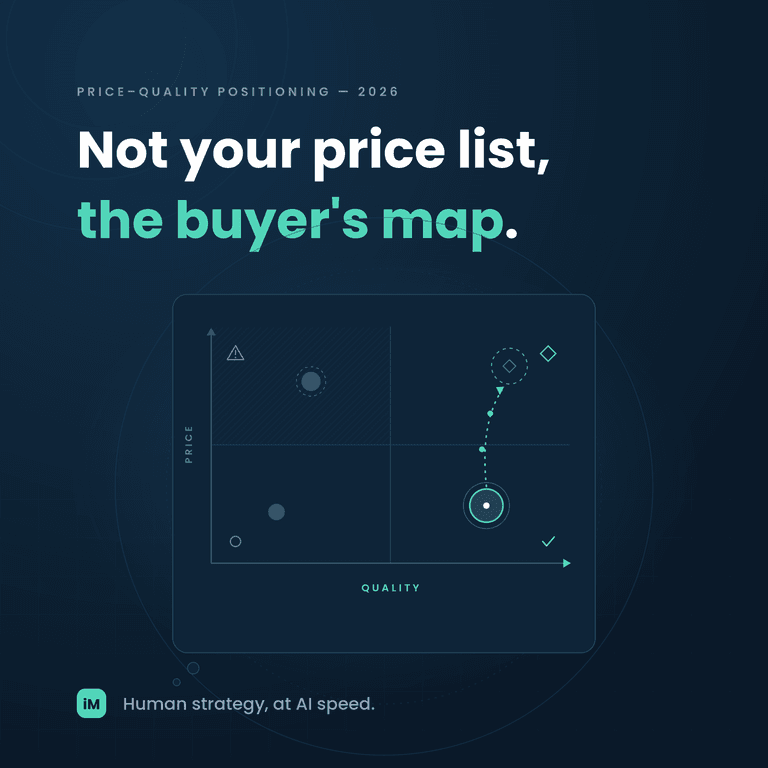
Pricing Strategy · June 27, 2026
The Price-Quality Matrix: Where Your Product Sits on the Buyer's Mental Map (and How to Move It)
Every buyer runs a mental 2x2 when they see your product — price on one axis, quality on the other. Where the buyer places you on that map decides more than the pricing calculation does: it decides whether they consider you at all, whether they see you as premium, and whether they treat your price as credible. Here is what the four quadrants of the price-quality map actually mean, why some positions are stable and others are dangerous, and how to move deliberately from one position to another when the strategy calls for it.
Read more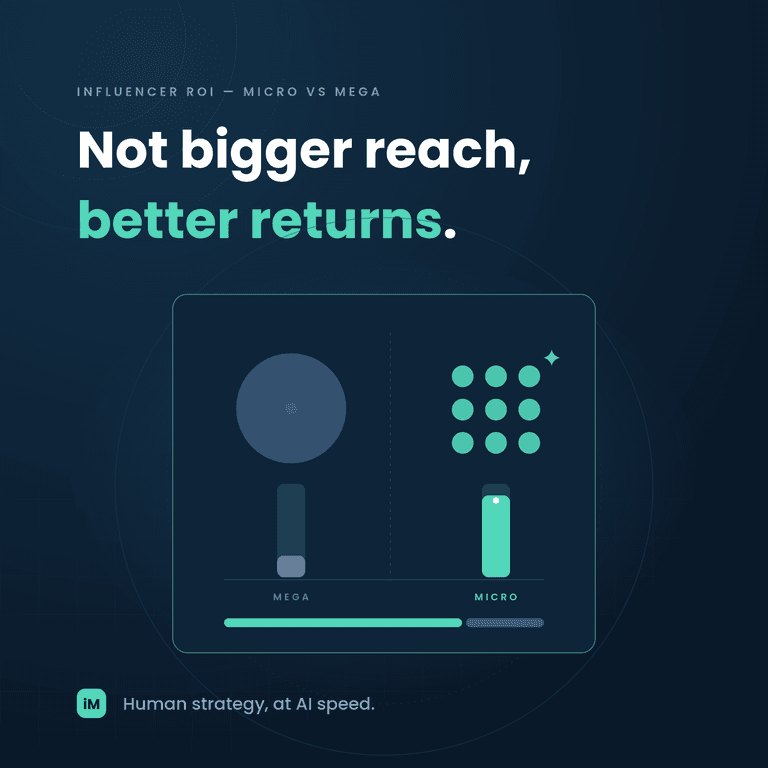
Influencer Marketing · June 26, 2026
Micro Keeps Beating Mega: The Influencer ROI Paradox That 2026 Enterprises Can't Ignore
For fifteen years, influencer selection has been dominated by a simple heuristic: bigger reach wins. In 2026 the ROI data has made that heuristic quietly indefensible. Micro-tier creators — the 10K to 500K follower band — routinely produce higher ROI per dollar than mega-tier partners at a fraction of the reach, and enterprises that still sort candidates by follower count are systematically overpaying for underperforming campaigns. Here is what changed, why the paradox is durable, and how to build a portfolio that captures the micro edge without abandoning the reach mega delivers when reach genuinely matters.
Read more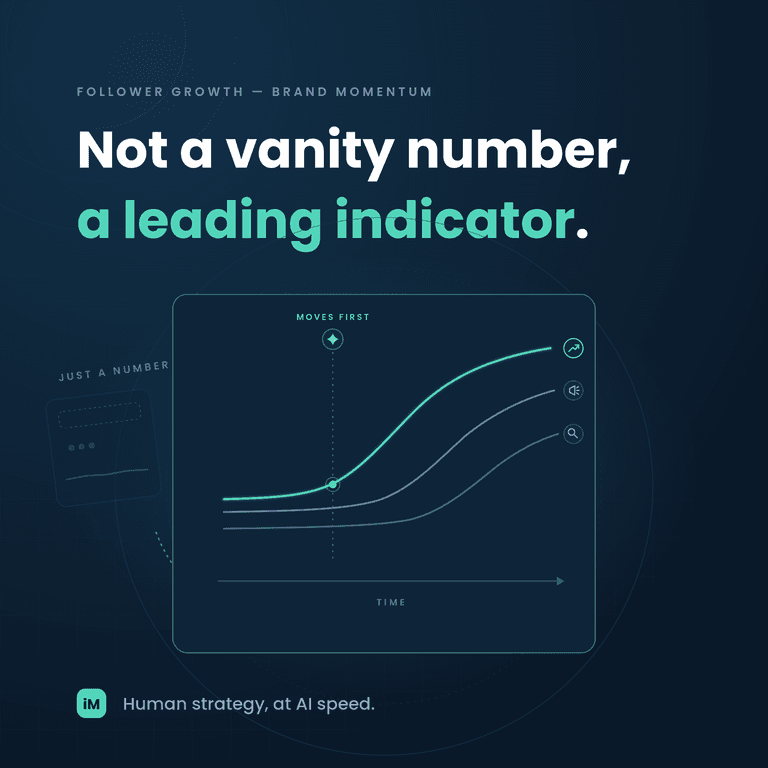
Social Media KPI · June 25, 2026
Follower Growth Is Not Just a Number — It Is a Leading Indicator of Brand Momentum
Follower growth is often dismissed as a shallow metric, a vanity number to be tracked but not taken seriously. That dismissal misses what the metric actually tells you when it is read the right way. Follower growth, tracked continuously and interpreted correctly, is one of the strongest leading indicators of brand momentum available to a marketing team — often visible before campaign metrics move, before search trends shift, and before the brand health survey catches up. Here is how to read it as the leading indicator it is.
Read more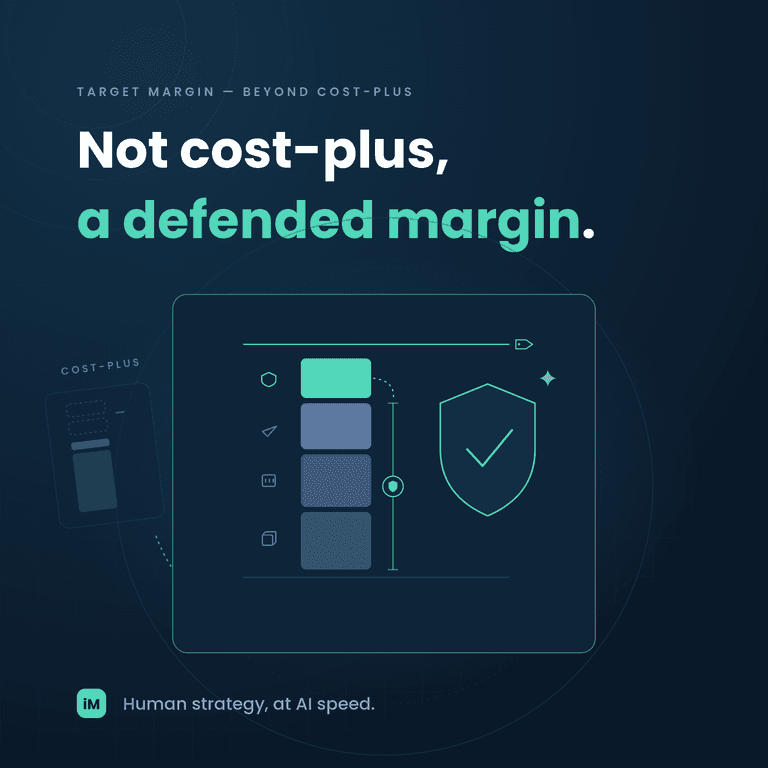
Pricing Strategy · June 24, 2026
Beyond Cost-Plus: How to Build a Target Margin That Protects Your Overhead, Not Just Your Product Cost
Cost-plus pricing produces a number quickly, but the number is often wrong in the same way: it covers product cost but leaves overhead uncovered, and the enterprise ends up busy without earning. Rebuilding the target margin so that it protects the full operating structure — product, overhead, go-to-market — is one of the highest-return pricing moves an enterprise can make, and one of the least well documented. Here is how to think about the target margin as a defense of profitability, not just an accounting output.
Read more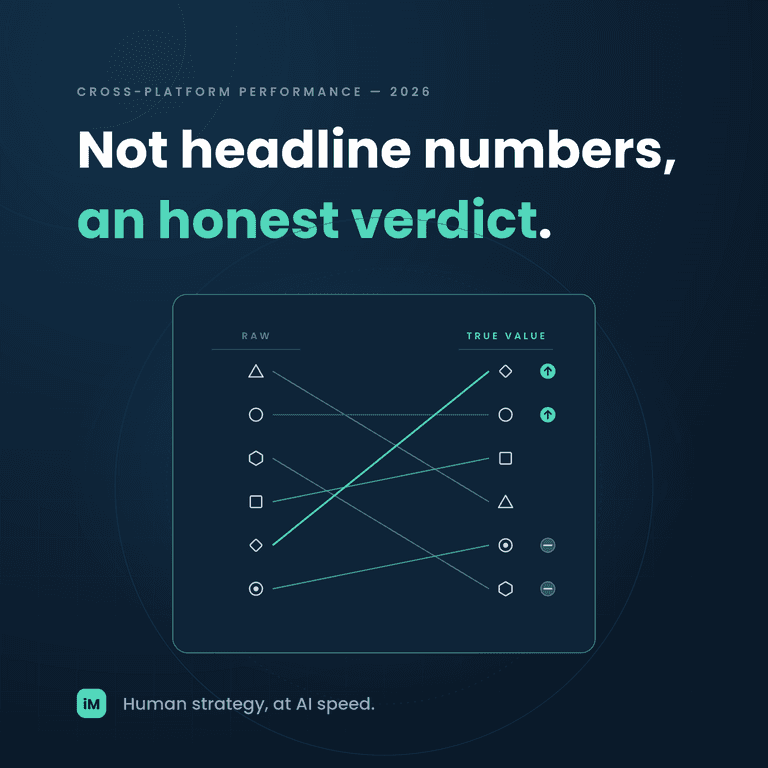
Social Media KPI · June 24, 2026
Which Platform Is Actually Working: The Right Way to Compare Cross-Platform Social Performance
Every social team has faced the same question — which of the six major platforms is genuinely producing value for the brand, and where should incremental effort go? The intuitive answer, which is to compare each platform's headline numbers side by side, produces conclusions that are systematically wrong. Here is why cross-platform comparison is harder than it looks, what a defensible comparison actually requires, and how to reach an honest verdict on which platforms deserve continued investment.
Read more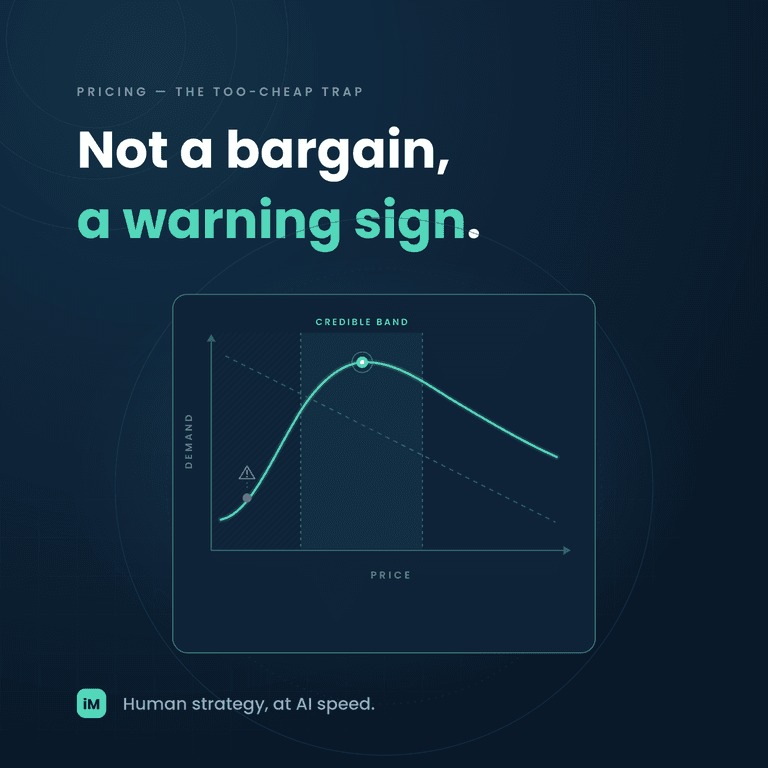
Pricing Strategy · June 21, 2026
The "Too Cheap" Trap: Why Lower Prices Sometimes Reduce Demand — and How to Protect Quality Perception
Every pricing textbook says that lower prices increase demand. Every experienced pricing lead can name at least one product where cutting the price actually reduced sales. The paradox is not a market anomaly — it is a systematic phenomenon that appears when the price drops below the band that the buyer treats as credible for the quality on offer. Here is what "too cheap" actually signals to buyers, why the effect has strengthened in 2026, and how to price aggressively without triggering the trap.
Read more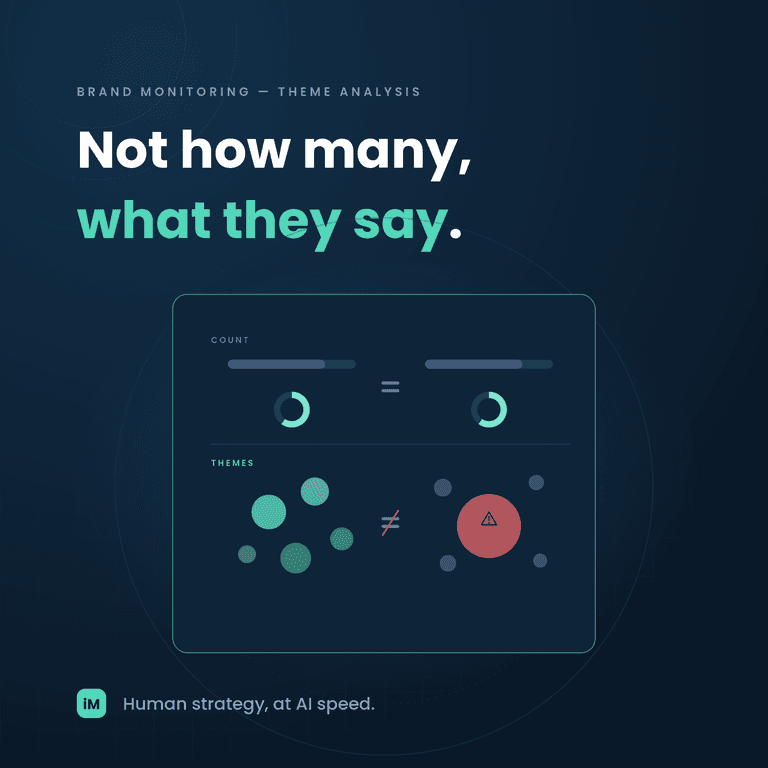
Brand Reputation Monitoring · June 19, 2026
Volume Was the Question, Theme Is the Answer: Why Modern Brand Monitoring Reads What People Say, Not How Many
For twenty years brand monitoring has been dominated by a single instrument — the mention count. Volume up is good. Volume down is bad. Sentiment attached is the modifier. That model built a reporting industry, but it stopped answering the questions enterprises actually needed answered years ago. The specific problem is that two brands with identical mention volumes and identical sentiment distributions can be facing completely different reputation situations, and the mention-count report cannot tell them apart. Here is why theme analysis has become the primary layer of modern brand monitoring, what it actually reveals that volume misses, and how enterprises are rebuilding their monitoring to read the conversation instead of counting it.
Read more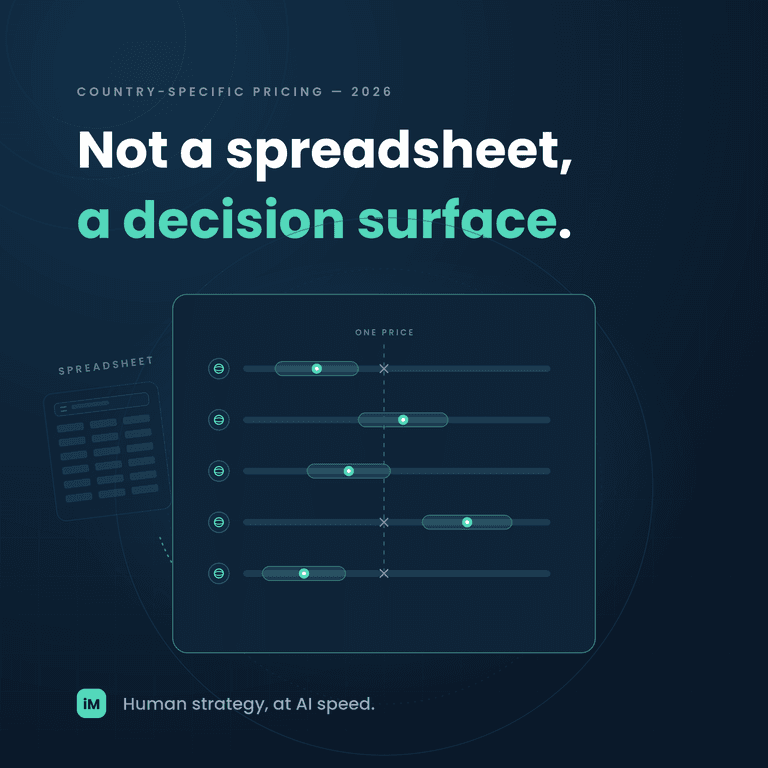
Pricing Strategy · June 18, 2026
Why Country-Specific Pricing Decisions in 2026 Need More Than a Spreadsheet
For years, country-level pricing lived in a spreadsheet that translated a home-market price into other markets using VAT tables and a rough purchasing-power adjustment. In 2026 that spreadsheet is producing prices that are systematically wrong in ways that matter — too high in some markets, too low in others, and rarely aligned with what buyers in each market actually treat as the credible price band. Here is why country-specific pricing decisions have outgrown the spreadsheet, what the decision surface actually needs to include, and how enterprises are shifting from single-price-with-adjustments to genuine per-market price setting.
Read more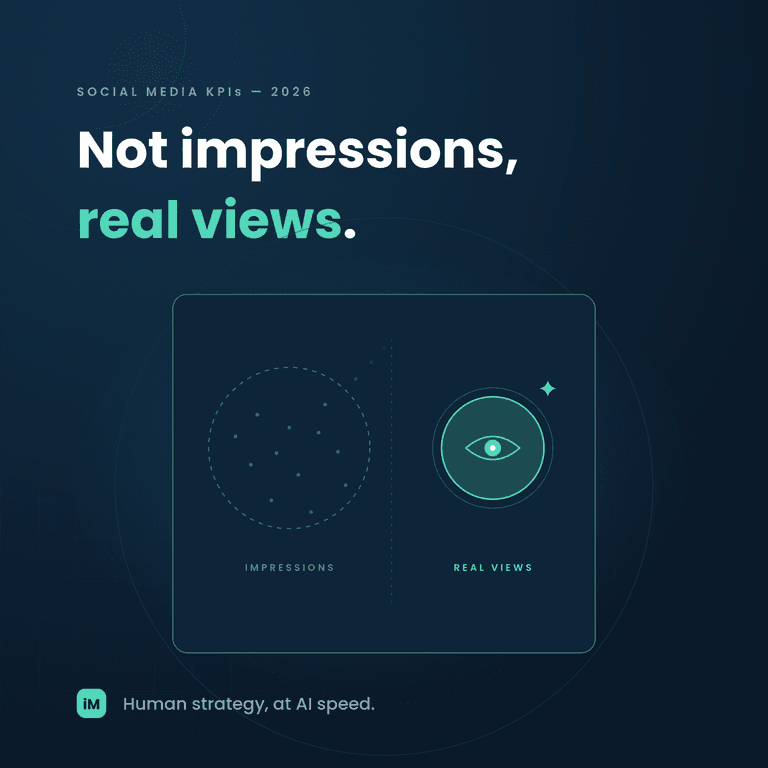
Social Media KPI · June 18, 2026
Why Social Media KPIs in 2026 Are Shifting from Inflated Impressions to Real Views
For a decade, social media reporting was built on impressions — a number that inflated over time until it stopped telling anyone anything useful. In 2026 that number has quietly lost its authority, and the enterprises that still build their social decisions on it are optimizing against noise. This piece explains what changed, what a real-view measurement actually looks like, and why the shift toward genuine viewership numbers is one of the most consequential changes in social measurement in the past decade.
Read more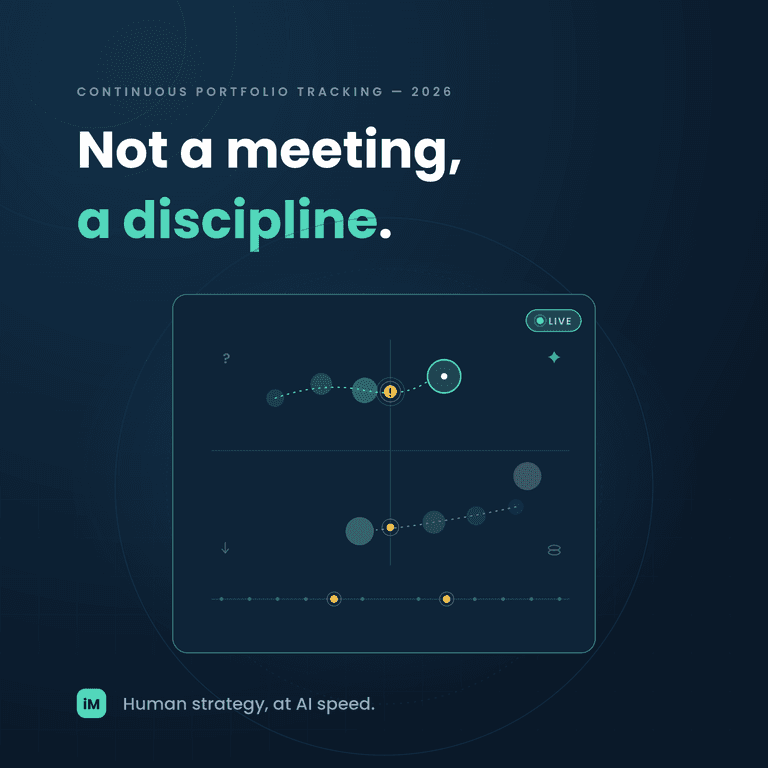
Portfolio Strategy · June 15, 2026
BCG Matrix Plus Competitive Intelligence: A Continuous Portfolio-Tracking Framework for 2026 Investment Decisions
The classical BCG matrix was designed as an annual planning artifact. In 2026, portfolio dynamics move too fast for annual planning. This piece describes a continuous portfolio-tracking framework that combines the modernized BCG matrix with continuous competitive intelligence — updating quadrant positions as the underlying signals update, surfacing reallocation triggers between reviews, and turning portfolio management from a scheduled meeting into an operating discipline.
Read more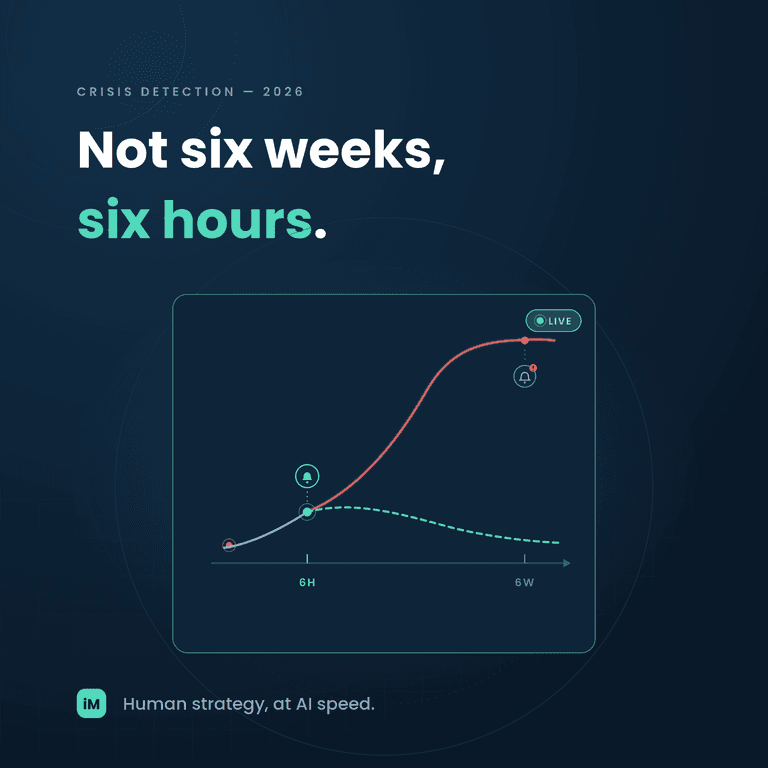
Brand Reputation Monitoring · June 15, 2026
Six Hours or Six Weeks: Why Crisis Detection Speed Is the Single Variable That Saves Brand Reputation
Every brand assumes it will catch its next reputation crisis early. Almost none do. The gap between the moment a crisis begins on social platforms and the moment the marketing team is notified has widened rather than closed over the past five years — because the platforms have compressed the crisis window while most brands still rely on monitoring cadences that were built for a slower era. Here is what happens inside a crisis window, why detection speed is the single variable that most reliably decides the outcome, and how enterprises are rebuilding their monitoring to catch the surge in the first six hours instead of the first six weeks.
Read more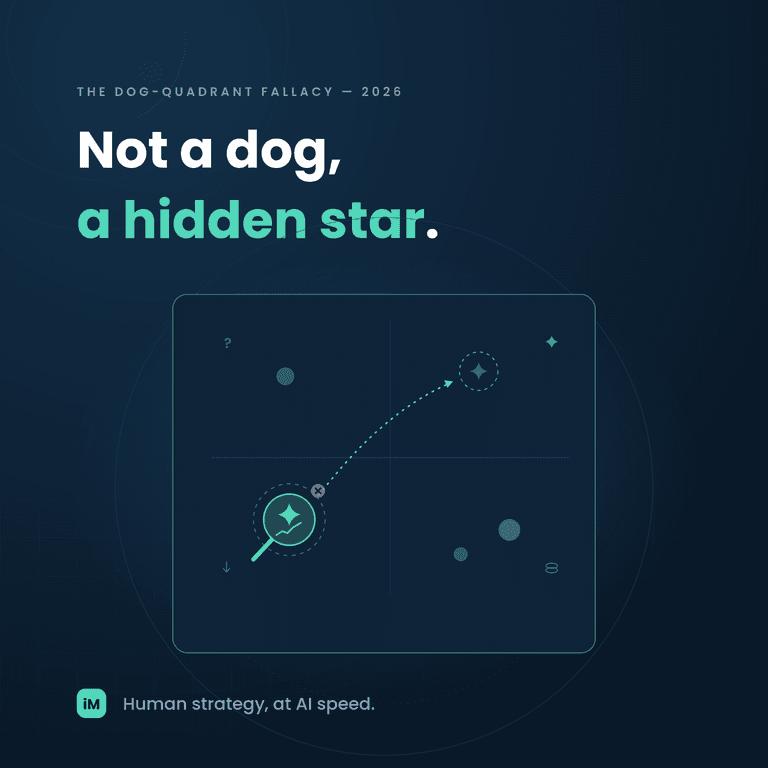
Portfolio Strategy · June 12, 2026
The Dog-Quadrant Fallacy: Why Some Brands Marked for Divestiture Are Hidden Stars
The Dog quadrant of the BCG matrix carries the strongest signal in the framework — divest. But the Dog label is the one most often over-triggered by lagging inputs, and the modernized matrix produces a specific pattern of Dog-that-is-actually-a-Star reclassifications that annual reviews miss. Here is the anatomy of the hidden-Star pattern, how to detect it before executing a divestiture, and what to do when the leading indicators contradict the classical read.
Read more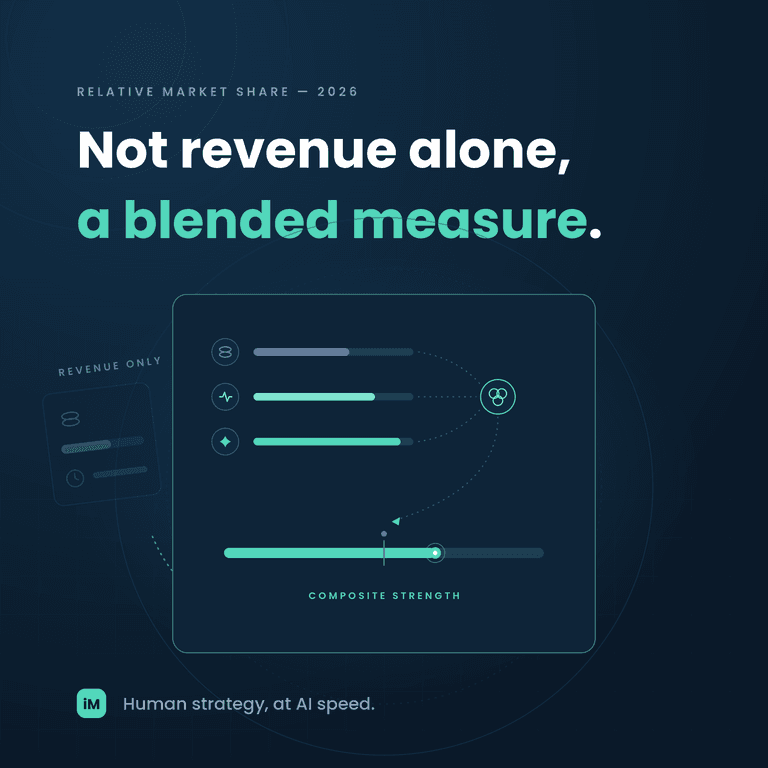
Portfolio Strategy · June 9, 2026
How to Measure Relative Market Share in 2026 — and Why Classical Revenue-Share No Longer Suffices
Relative market share was the horizontal axis of the classical BCG matrix and it remains one of the cleanest ideas in strategy — your share of the market divided by the largest competitor's share, one number that captures competitive strength. What has changed is that the number itself is now too slow and too gameable to support portfolio decisions. Here is how to measure relative competitive strength for 2026's portfolio matrix, what to blend with revenue share, and how to avoid the measurement traps that have derailed most modernization attempts.
Read more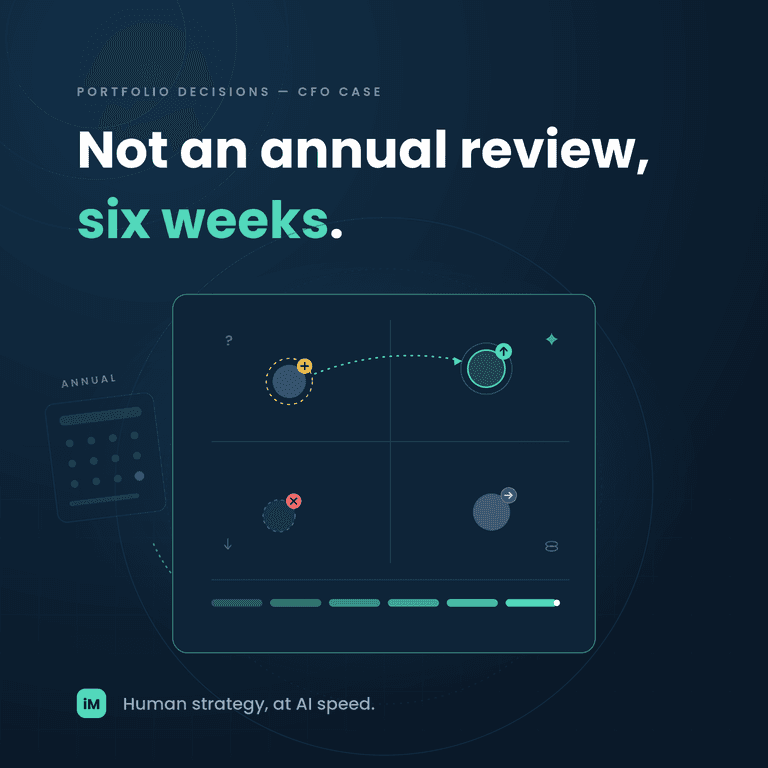
Portfolio Strategy · June 6, 2026
Star, Cash Cow, Question Mark, Dog: How One CFO Reprioritized Portfolio Investment in Six Weeks
A composite case drawn from three multi-brand groups shows how a modernized BCG matrix — with AI visibility and digital demand data on both axes — moved a CFO from an annual reallocation cadence to a six-week reprioritization that shifted marketing spend across four brands, killed one, and rescued another that the annual review would have divested. Here is the walkthrough, quadrant by quadrant, decision by decision.
Read more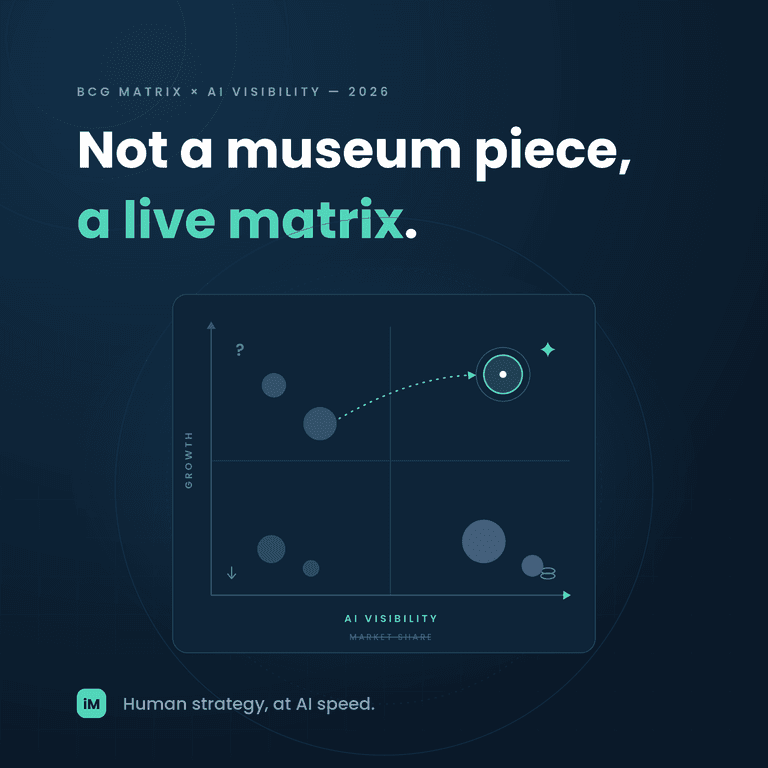
Portfolio Strategy · June 3, 2026
BCG Matrix Reborn: Why Portfolio Positioning in 2026 Is Incomplete Without AI Visibility Data
For twenty years the BCG growth-share matrix was treated as a museum piece — useful for teaching, obsolete for deciding. In 2026 it is back on boardroom walls, but with two axes rebuilt for a market where AI-driven discovery reshapes categories faster than annual revenue reports can capture. Here is why the matrix returned, what changed about how to measure it, and where AI visibility data has become the leading indicator CFOs and CMOs are aligning around.
Read more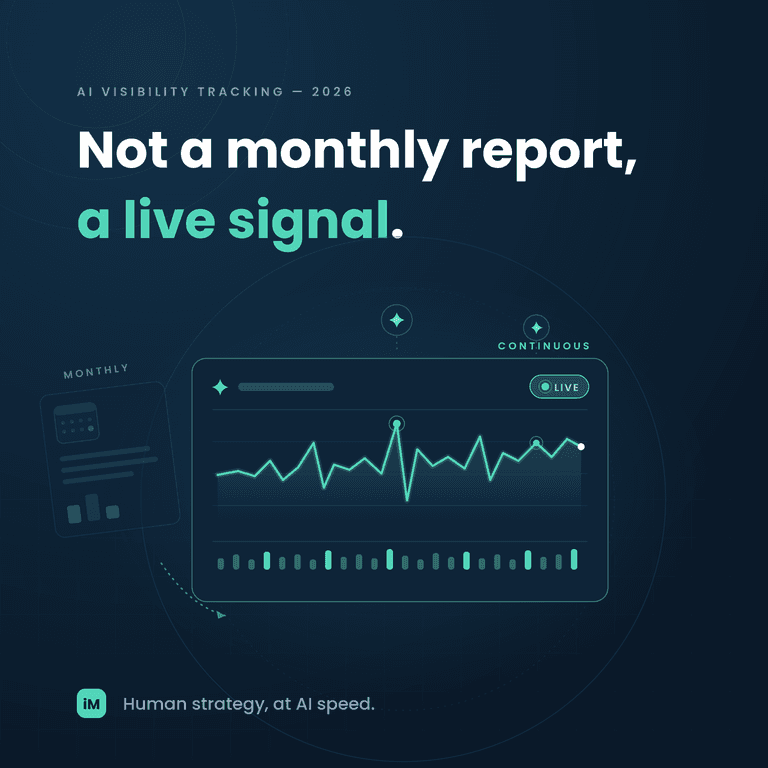
AI Visibility · May 31, 2026
From SEO Reports to AI Decision Signals: The Case for Continuous AI Visibility Tracking
The monthly SEO report told you what happened. In 2026, that rhythm is too slow for AI search. AI visibility is a live signal that shifts weekly, sometimes daily, as models update and the web around your brand changes. Here is why continuous AI visibility tracking has become the new operating requirement, what to measure, and what enterprises are getting wrong when they try to bolt AI tracking onto an SEO reporting cadence.
Read more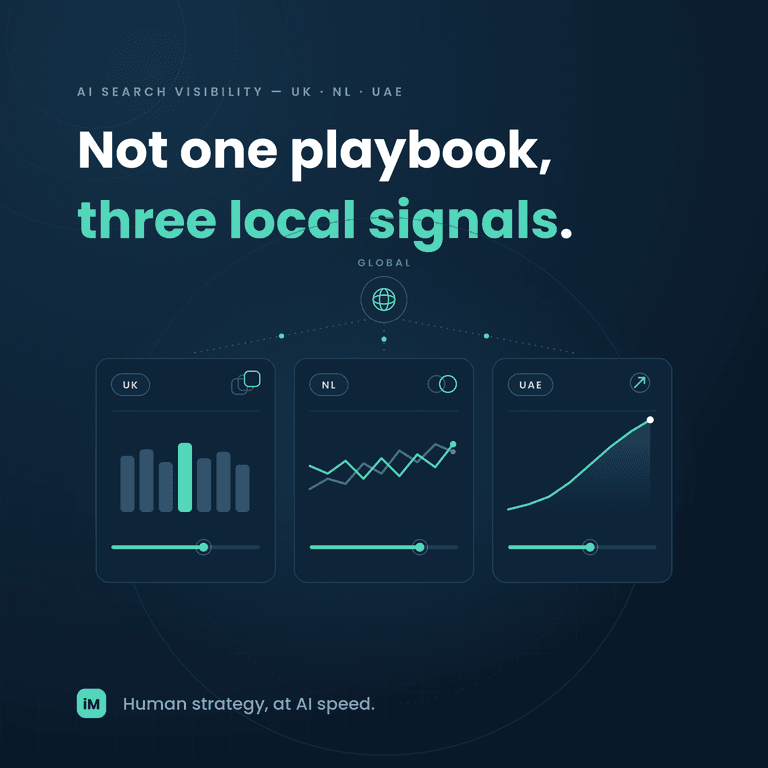
AI Visibility · May 28, 2026
AI Search Visibility in the UK, Netherlands, and UAE: What Enterprise Marketers Are Getting Wrong
AI search visibility looks like a global problem until you look at the UK, Netherlands, and UAE side by side. Regional dynamics — regulatory context, language mix, competitive intensity, buyer culture — reshape what enterprise marketers should measure and where they should invest. Here is what is actually different in each market, and what enterprises across all three are getting wrong in 2026.
Read more
Social Media KPI · May 28, 2026
The End of Vanity Metrics: Why Post-Level Engagement Rate Is More Valuable Than Total Follower Count
For most of the past decade, social reporting led with the follower count and the total reach. Both are still tracked, but neither is the metric that best supports content decisions. The metric that does — engagement rate at the individual post level — has been available all along. Here is why the shift toward post-level engagement analysis is quietly reshaping how the best social teams operate, and what the top-of-report metric should actually be.
Read more
Social Media KPI · May 26, 2026
Single Pane, Operating Rhythm: How to Turn Social KPI Reporting from a Monthly Slide Into a Working Discipline
Most enterprise social reporting still lives in a monthly slide deck — a document produced at the end of each month, reviewed briefly, and filed. That format made sense when social was a supporting channel. In 2026 it does not. This piece walks through how leading enterprises are shifting from monthly report production to a single-pane operating rhythm, what changes about the team's workflow, and why the shift compounds returns against enterprises still stuck in the monthly-deck cycle.
Read more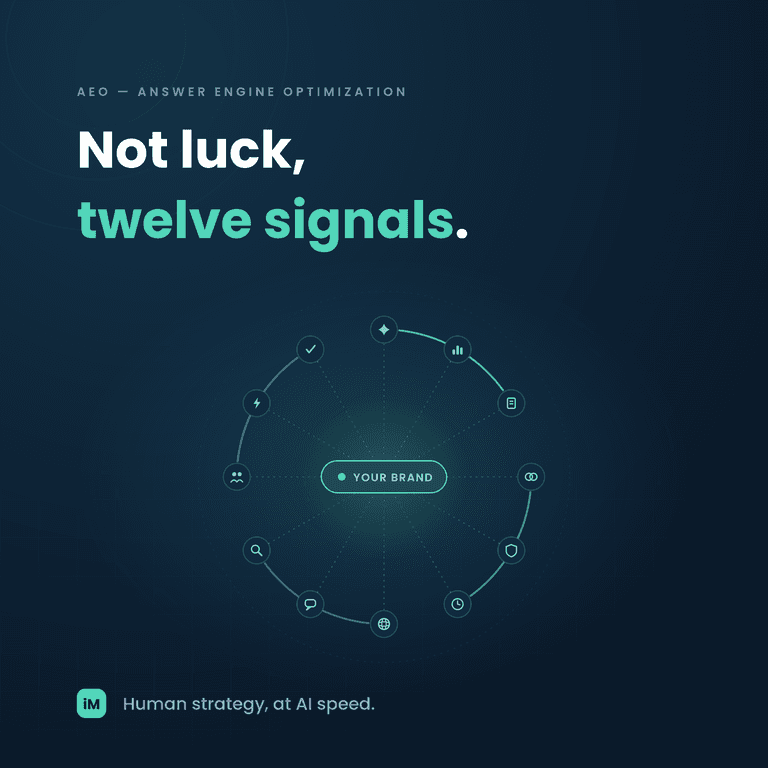
AI Visibility · May 25, 2026
Answer Engine Optimization (AEO): The 12 Signals AI Models Weight When Recommending a Brand
AI engines do not pick brands at random. There are twelve concrete signals ChatGPT, Perplexity, Gemini, and Claude weight when deciding which brand to mention, cite, or recommend. Here are the twelve, grouped by category, with what each one actually measures and what enterprises can do about it in 2026.
Read more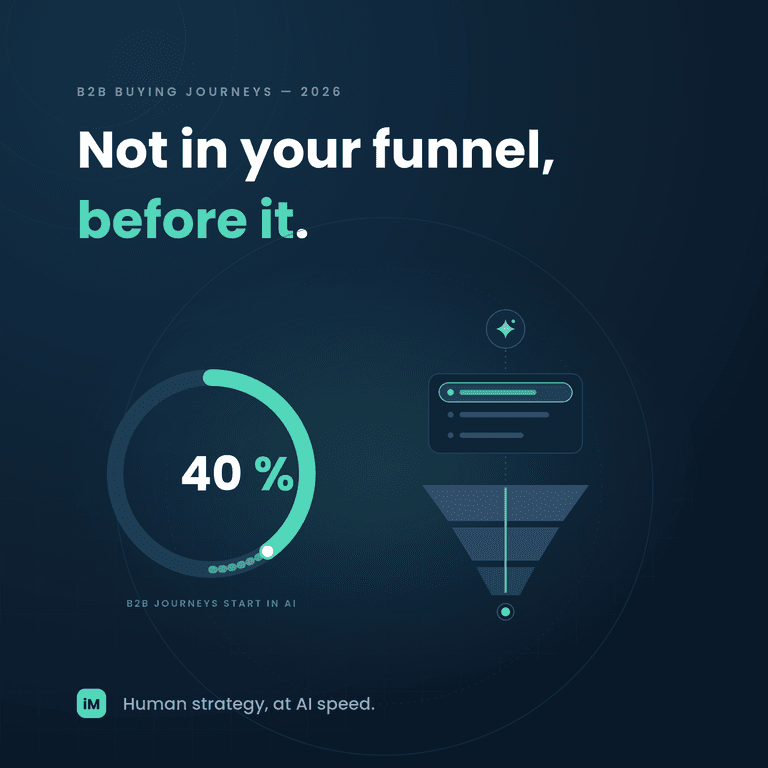
AI Visibility · May 22, 2026
Why 40%+ of B2B Buying Journeys Now Start in AI Search — And How Enterprises Can Capture Them
In 2026, roughly 40% of B2B research journeys — and closer to 50% in software — now begin inside an AI assistant, not a search engine. That shift decides which vendors make the shortlist before the traditional funnel even opens. Here is what is actually happening, where AI search reshapes the buying journey, and how enterprises are learning to capture that early attention.
Read more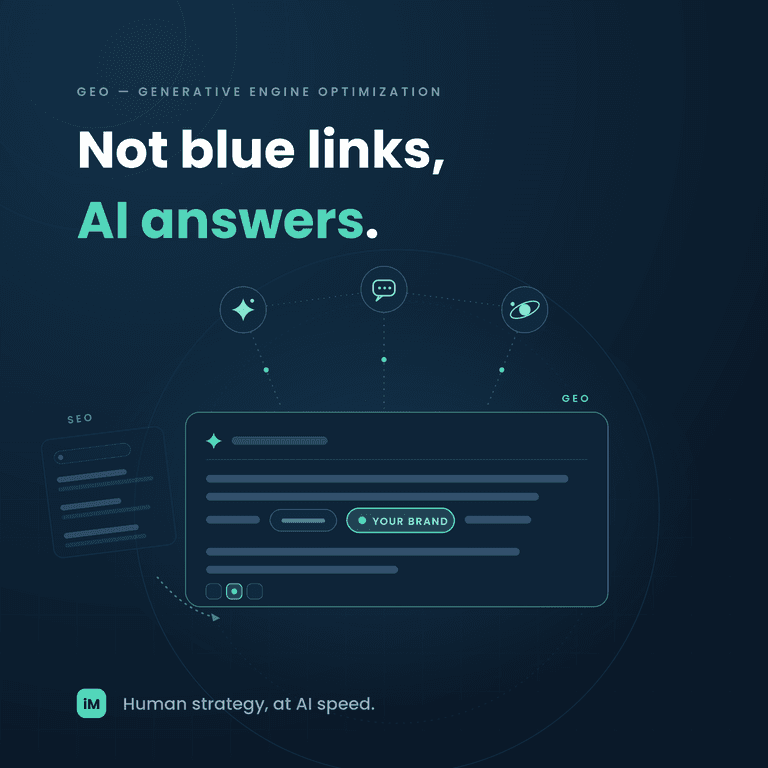
AI Visibility · May 19, 2026
Generative Engine Optimization Explained: The 2026 Framework for Ranking in ChatGPT, Perplexity, and Gemini
Traditional SEO ranked pages for Google's blue links. GEO — Generative Engine Optimization — makes your brand the one AI answers cite. Here is the 2026 framework enterprises are using to appear inside ChatGPT, Perplexity, and Gemini responses, plus what to measure and how to build it into an operating rhythm.
Read more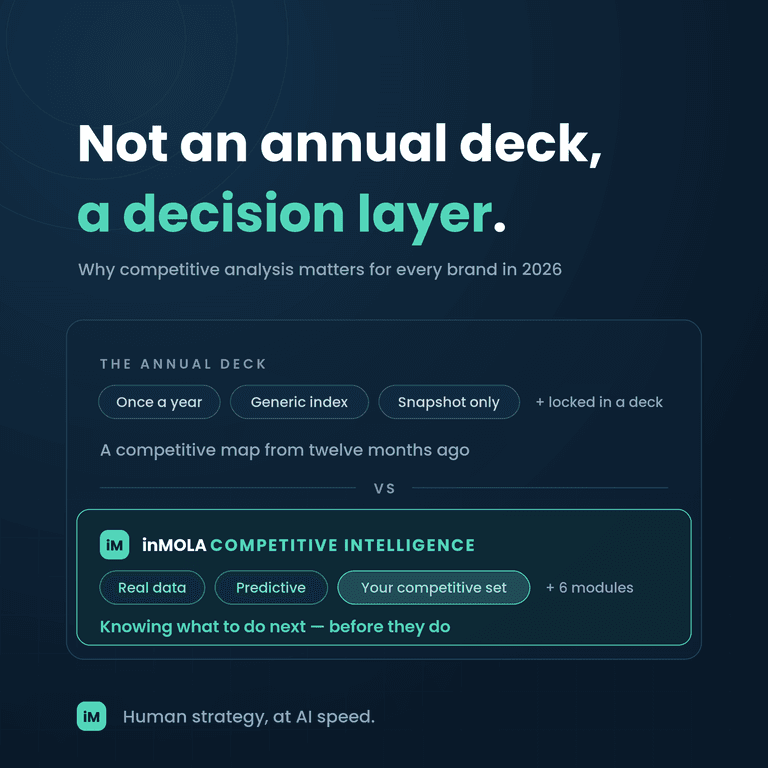
Competitive Intelligence · May 16, 2026
Why Competitive Analysis Matters for Every Brand — and What Real Competitive Intelligence Looks Like in 2026
Most brands still run competitive analysis as an annual PowerPoint deck. In 2026, the timing is too slow, the data is too generic, and the decision layer is missing. Here is why competitive analysis is the one discipline no brand can skip — and what real competitive intelligence looks like when it is done right.
Read more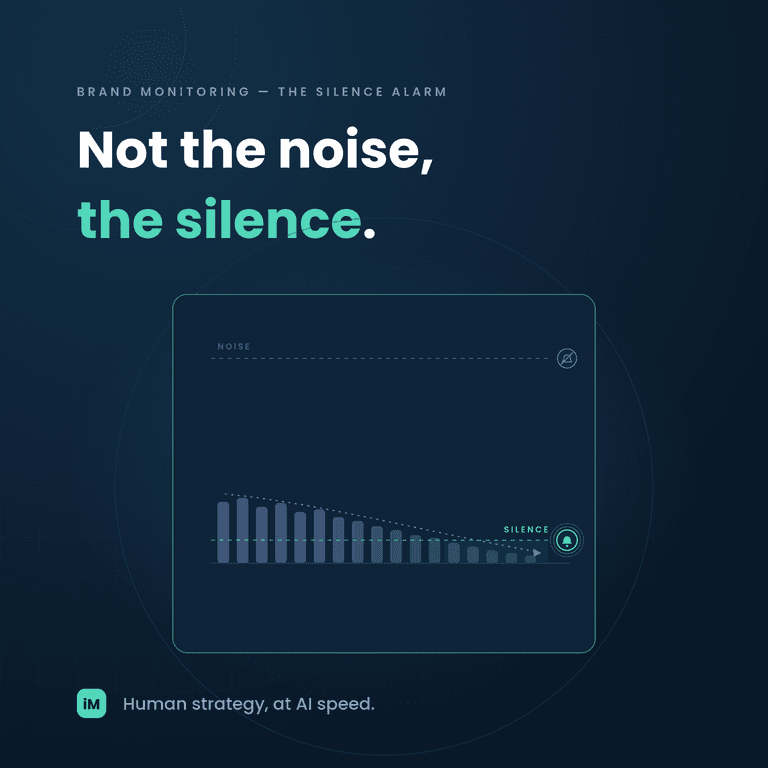
Brand Reputation Monitoring · May 15, 2026
The Silence Alarm: Why the Absence of Conversation About Your Brand Is Often the Warning Signal Every Other Metric Misses
Most brand monitoring is optimized to detect the wrong problem. Negative surge, viral incident, sentiment collapse — the entire alerting apparatus is built around noise, because noise is what the industry has learned to fear. In 2026 the more insidious reputation risk is the opposite: silence. The brand that used to be part of the category conversation quietly stops showing up in it, and the drift is invisible to every monitoring instrument tuned for volume or sentiment. Here is why brand silence has become one of the highest-leverage warning signals for enterprises, what it actually indicates, and why the enterprises building silence alarms into their monitoring stack are catching a category of reputation risk their competitors are not.
Read more
News · April 25, 2026
Bester Media Introduces InMola – The Next Generation AI Marketing Decision Engine
Istanbul, Türkiye — Bester Media has announced the Early Access Launch of InMola, an advanced AI-driven marketing intelligence platform built to redefine how brands interpret data and make decisions.
Read more
News · April 22, 2026
inMOLA Launches Pilot Phase with 10 Major Companies
inMOLA has officially entered its Pilot (Proof of Concept) phase as a next-generation SaaS growth platform built on data-driven and algorithmic marketing modeling.
Read more
Strategy · April 19, 2026
Why Marketing Teams Are Drowning in Data But Starving for Insights
There has never been more marketing data available. And yet, ask a marketing director what they should do next — and most will pause. Not because the data isn't there. Because the insight isn't.
Read more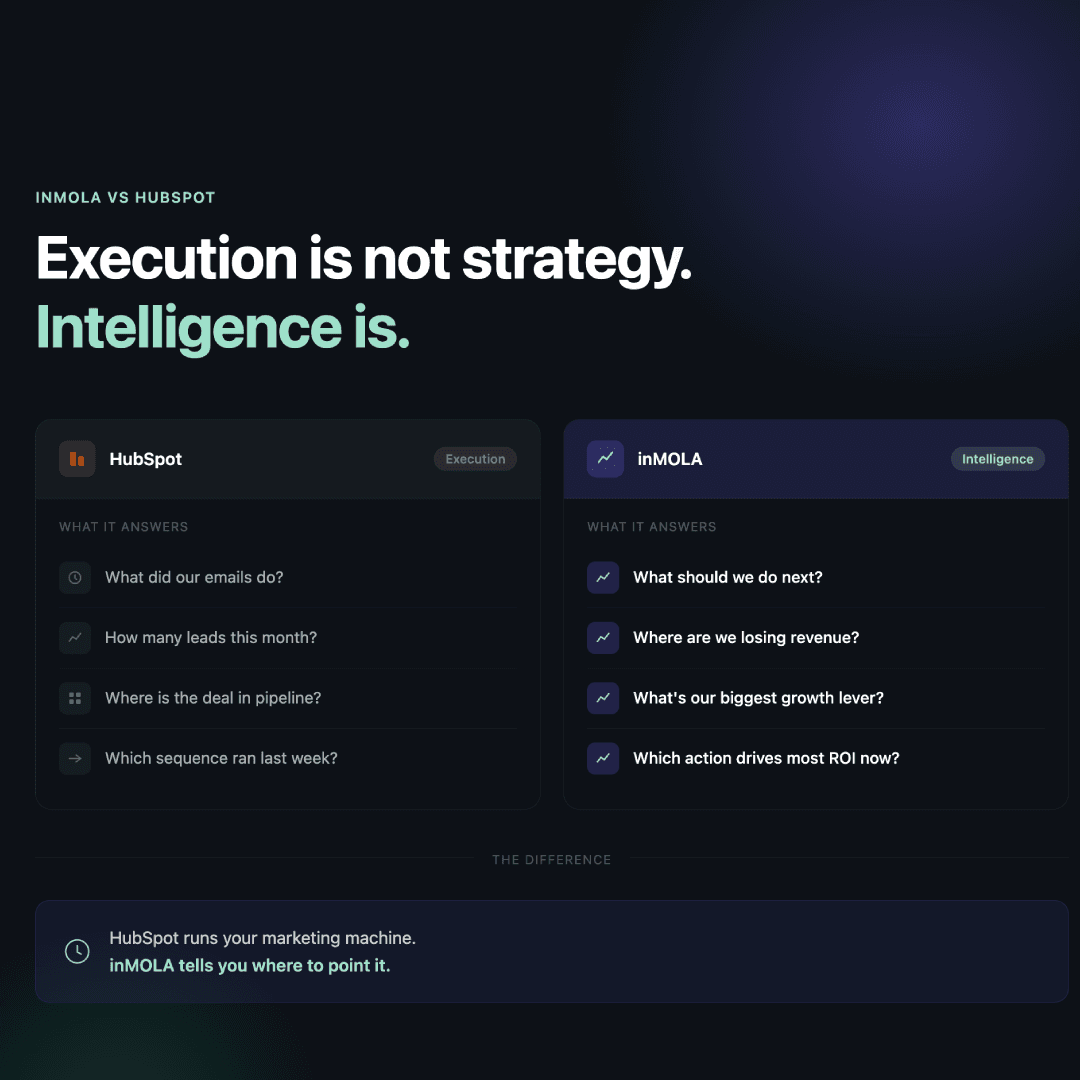
Decision Intelligence · April 16, 2026
HubSpot vs inMOLA: Which One Actually Tells You What to Do Next?
Let's be honest about something most marketing software comparisons won't tell you. HubSpot is a great tool — but it answers operational questions, not strategic ones.
Read more
Strategy · April 13, 2026
What Enterprise Consultants Know That Your Marketing Team Doesn't
Every year, the world's largest companies spend hundreds of thousands — sometimes millions — on strategic marketing consultants. Not on advertising. Not on tools. On thinking.
Read more
Press Release · April 10, 2026
inMOLA Announces First Three Strategic Partnerships for Its AI-Powered Marketing Decision Engine
Collaborations with Teknopark İstanbul, LG Electronics and Netpak mark the foundation of inMOLA's go-to-market chapter and reinforce its global ambitions.
Read more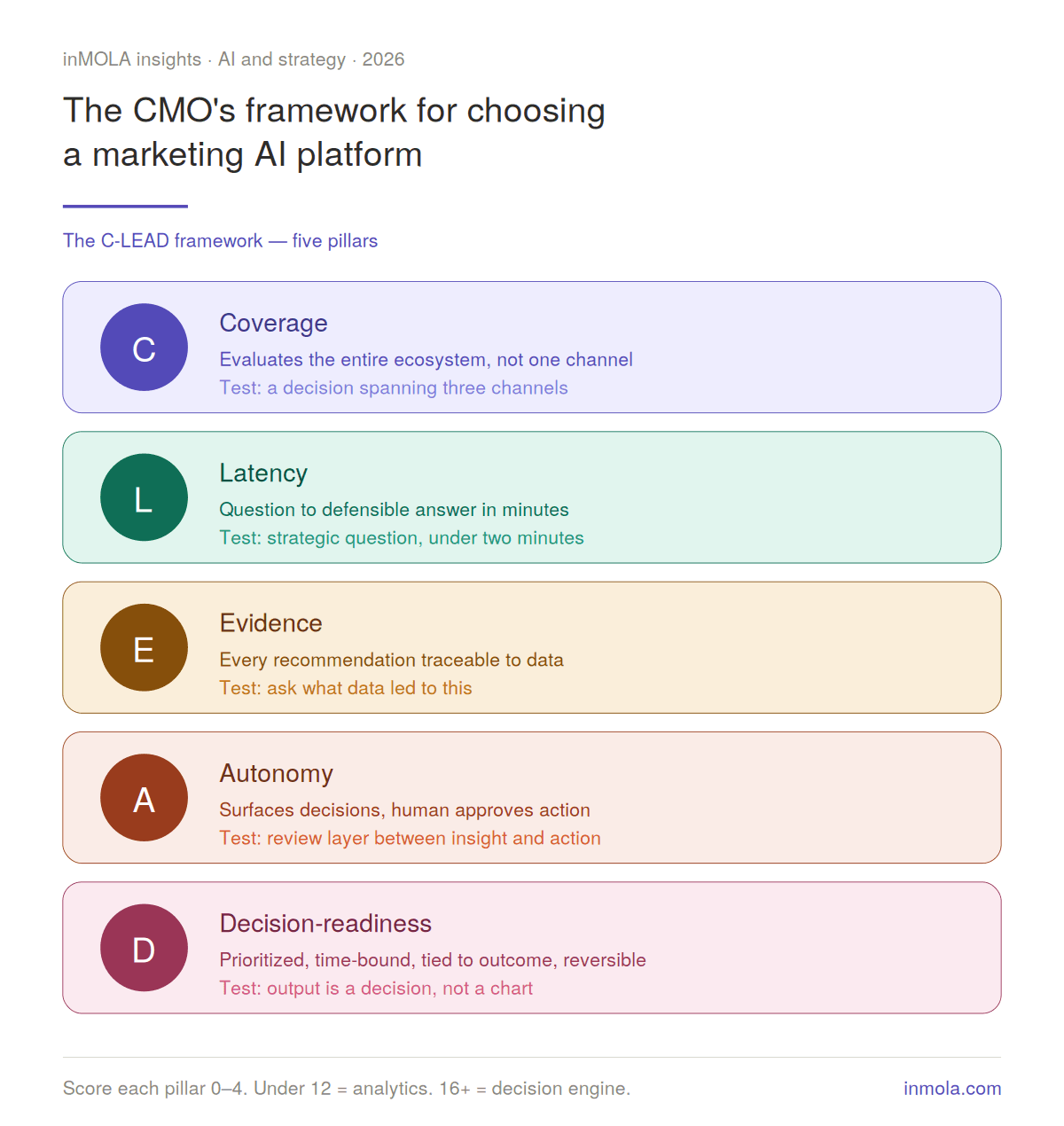
AI and Strategy · April 7, 2026
The CMO's Framework for Choosing a Marketing AI Platform in 2026
Most marketing AI platforms in 2026 are analytics tools with a chatbot bolted on. This is the framework CMOs are using to tell the difference between cosmetic AI and genuine decision intelligence.
Read more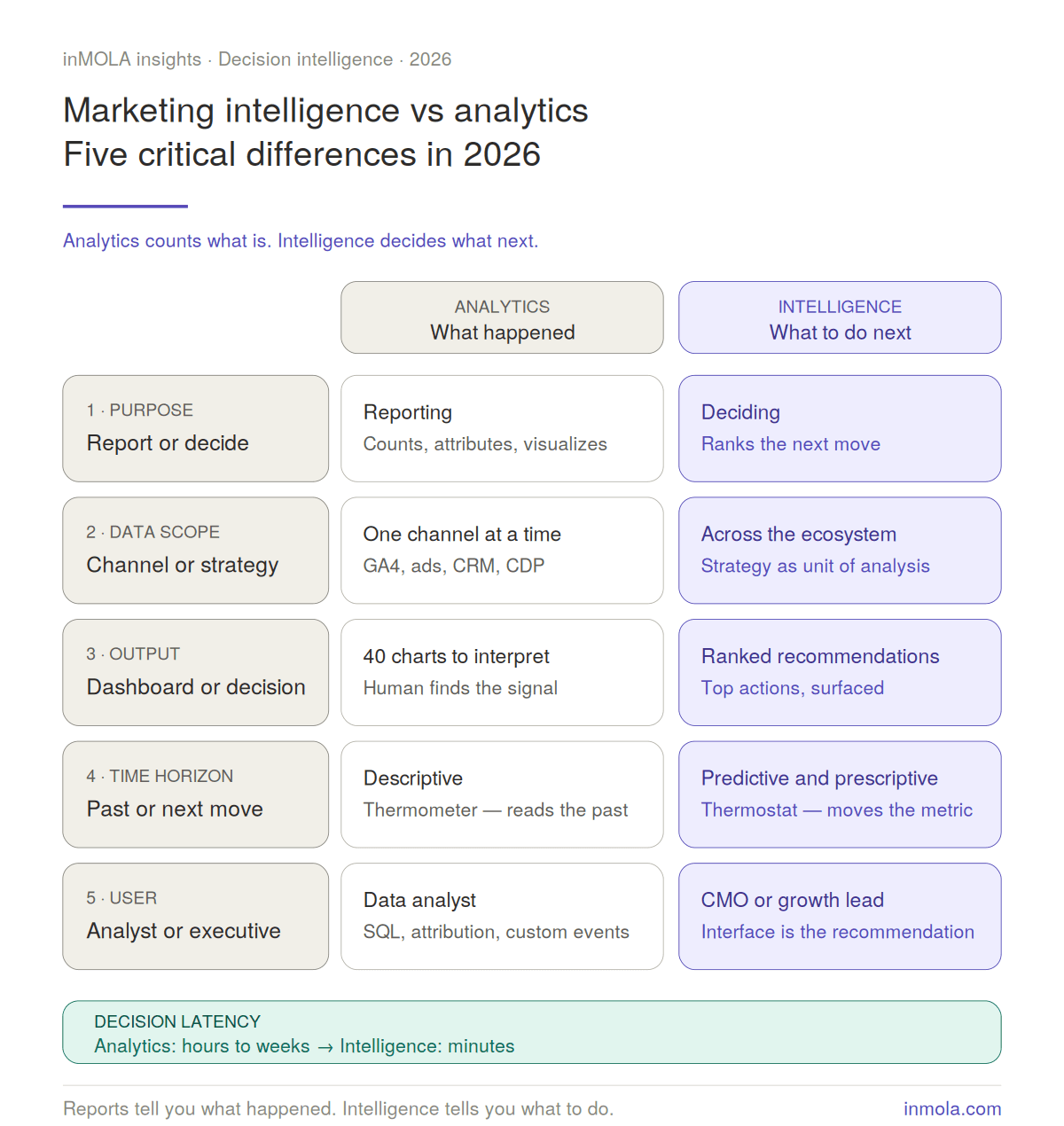
Decision Intelligence · April 4, 2026
Marketing Intelligence vs Marketing Analytics: 5 Critical Differences in 2026
Marketing analytics tells you what happened. Marketing intelligence tells you what to do next. Here are the five differences that separate the two — and why 2026 is the year the distinction finally matters.
Read more
Strategy · March 27, 2026
How to Measure Marketing Efficiency: KPIs that Actually Matter in 2025
In 2025, marketing isn't about who spends more — it's about who measures smarter. The KPIs that win this year are about value, not vanity.
Read more
AI & Strategy · March 26, 2026
The Future of Marketing Intelligence: How AI Will Redefine Brand Strategy
Data is the new currency, and AI is the driving force behind how brands understand, predict, and influence customer behavior. The next phase isn't about more data — it's about marketing intelligence.
Read more
Performance · March 23, 2026
Reducing Costs with Algorithms: Efficiency and Effectiveness
Marketing algorithms do not only increase sales but also reduce costs. They help you optimize your marketing budget by increasing efficiency.
Read more
AI & Strategy · March 16, 2026
AI-Driven Marketing: inMOLA's Innovative Approach
Artificial Intelligence is revolutionizing the marketing world. inMOLA's innovative AI-driven solutions help brands optimize their marketing strategies.
Read more
Performance · March 7, 2026
The Power of Marketing Algorithms: Solutions That Boost Sales
Marketing algorithms analyze customer behavior to deliver the right message to your target audience — boosting sales and cutting costs.
Read more
Marketing Intelligence · March 2, 2026
Why Generic AI Falls Short in Marketing — and What 25 Years of Encoded Expertise Does Differently
Generic AI platforms produce plausible-sounding marketing strategies from five-line prompts. inMOLA is built differently — twenty-five years of operator experience encoded into algorithms, with AI as the accelerator, not the strategist.
Read more